

Table of Contents
What a GTM Workflow Actually Covers
AI Workflows by Function
Where GTM Handoffs Break and How AI Helps or Hurts
The Shared Layer: Data and Definitions
Who Owns the AI Layer
How to Sequence the Work
How to Measure Whether Any of This Is Working
Where AI GTM Workflows Usually Fail
How Cleverly Plugs Into a GTM Motion
Conclusion
Frequently Asked Questions
Modified On :
October 14, 2026
Key Takeaways
- GTM runs from first touch to renewal, and workflows cross every function. Design around the workflow, not the tool.
- Value is created or lost at the handoffs. Agree the definition and required context first, then automate the transfer.
- Clean shared data and written definitions set the ceiling for every AI workflow. Automation encodes disagreement faster than any meeting ever did.
- Someone has to own the AI layer, review what it produces, and maintain its connections. RevOps is usually the right home.
- Sequence the work: map, fix definitions, automate inside one function, then fix the leakiest handoff. Measure against your own baseline.
Salesloft’s 2026 Revenue Benchmark found that 100% of revenue teams use AI somewhere, but only 20.6% can show measurable results. Salesforce’s latest State of Sales report tells a similar story.
87% of sales organizations already use AI for prospecting, forecasting, lead scoring, or email drafting, yet 51% of AI-using leaders cite silos as a deployment barrier.
So adoption isn’t the problem. The way it happened is.
AI workflows for GTM teams were adopted function by function. Marketing automated its work. Sales automated its work. CS did the same. The gaps between those teams stayed exactly where they were. That is the argument of this guide. AI doesn’t fix a disconnected revenue org. It makes the disconnections more visible and more expensive.
We’ll cover workflows by function, where handoffs break, shared data and definitions, ownership, and how to sequence the work.
It’s written for founders, CROs, VPs of marketing and sales, and RevOps leads who think across the whole funnel. If you want the sales-side build in detail, read our AI outbound sales workflow guide.
What a GTM Workflow Actually Covers
Plenty of people use “GTM” as shorthand for the sales process. That’s too narrow.
A real AI-powered go-to-market strategy covers everything from the first ad impression to the renewal conversation two years later. If you only automate the front half, you’ll book more meetings that churn faster.
The Four Functions and What Each Owns
Why Workflows Beat Tools as the Unit of Analysis
Tools get bought per function. Workflows cross them. A lead enrichment tool belongs to marketing, but the output lands in a rep’s CRM view and shapes a CS renewal conversation a year later. If you evaluate the tool alone, you miss where it actually helps or hurts.
The Four Handoffs Where Value Is Won or Lost
- Marketing to sales
- SDR to AE
- AE to CS
- CS back to marketing
We’ll go through each one in detail below. The structure from here is simple. Function-level workflows come first, then the handoffs, then the shared layer underneath.
🤖 Build Your GTM Engine on Autopilot
AI can speed up your workflow, but execution still matters. Cleverly handles prospecting and multichannel outreach so your team can focus on closing deals.
AI Workflows by Function
This section covers where generative AI for GTM earns its place in each function. For each one, we also name the limit. Every function has one.
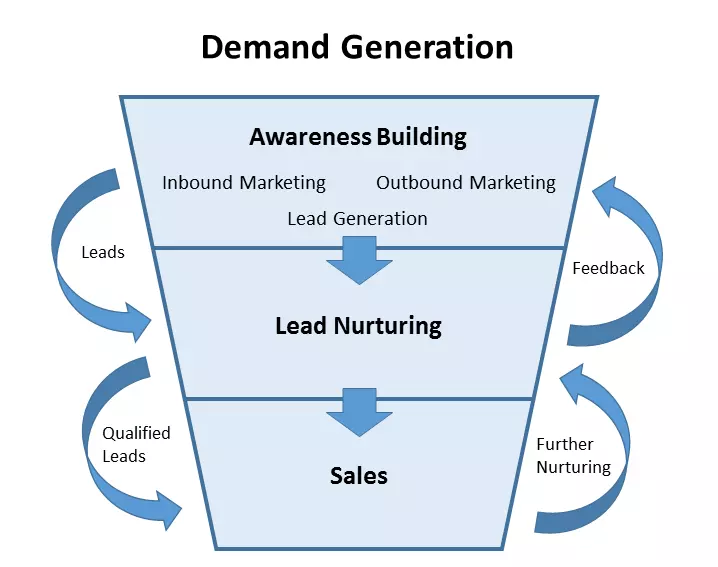
Marketing and Demand Generation
Where AI helps
- Content production and repurposing at volume.
- Segment-level messaging, so one core message gets adapted for each audience.
- Campaign variant testing, where AI drafts ten subject lines and you test the best three.
- Audience building and behavioral segmentation from first-party data.
The limit: AI scales output. If your positioning is weak, it just publishes weak positioning faster. Fix the message first. For the segmentation side, see our behavioral segmentation guide.
Pro tip: Use AI to cut production time, then spend the saved hours on message testing. Most of the value sits there.
Sales Development and Outbound
Where AI helps
- ICP definition and list building
- Enrichment and account research
- Sequence copy drafts
- Reply classification and routing, so a “not now” and a “send me pricing” never land in the same queue
The limit: Targeting and offer quality still decide results. A well-built workflow sending a weak offer to the wrong list gets you a very efficient bad month. We break the full build down in our AI outbound sales workflow guide.
Account Executives and Closing
Where AI helps
- Call preparation briefs and account summaries
- Competitive context pulled before the meeting
- Follow-up drafting after calls
- Deal risk flagging from CRM and call data, such as a stalled champion or a missing economic buyer
The limit: Discovery, negotiation, and reading the room stay human. AI can tell you a deal looks risky. It can’t sit across from a nervous buyer and work out why.
Customer Success and Expansion

Where AI helps
- Health scoring and churn risk flags
- Usage pattern summaries
- Renewal prep
- Automated handoff documents built from CRM records and call transcripts
The limit: Relationship judgment and difficult conversations. A health score can flag a risk. It can’t repair trust after a bad quarter.
Revenue Operations
Where AI helps
- Data hygiene and enrichment
- Routing rules
- Forecasting inputs and reporting
- Increasingly, governing the AI layer itself across the other three functions
The limit: AI can’t resolve disagreements between teams about definitions. If marketing and sales define a qualified lead differently, no model settles that argument. People do.
Where GTM Handoffs Break and How AI Helps or Hurts
This is where GTM workflow automation matters most. Handoffs are the actual GTM problem. Each function can run well on its own and the revenue system still leaks.
Marketing to Sales
Leads arrive with a score but no context. The rep starts cold and asks questions the buyer already answered on a webinar form.
A good handoff carries three things:
- What the lead engaged with
- What triggered the routing
- A suggested angle for the first conversation
SDR to AE
A booked meeting shows up on the calendar with almost no qualification detail. The AE runs discovery from scratch and the buyer repeats everything they told the SDR. That feels like a bad experience from the first minute.
AE to CS
Closed deals hand over with promises nobody recorded. A custom integration, a pricing exception, a verbal timeline. CS finds out when the customer mentions it. That’s churn risk on day one.
CS Back to Marketing
Expansion signals and churn reasons rarely make it back into targeting. Marketing keeps chasing the profile that churns while ignoring the profile that expands. This is the most neglected handoff in most revenue orgs.
Where Each Handoff Leaks
How AI Helps
AI can generate a context-rich handoff summary automatically from call transcripts and CRM activity. You no longer rely on a rep writing good notes at 5 p.m. on a Friday. That one change closes a lot of leaks.
How AI Hurts
Automating a handoff that was never agreed just moves bad information faster. If nobody defined what “qualified” means, an automated SDR-to-AE transfer will pass along confident-looking summaries of unqualified meetings.
The Rule
Agree the definition and the required context first. Then automate the transfer. In that order, every time.
🚀 From AI Workflow to Full Pipeline
Let Cleverly turn your GTM strategy into qualified meetings. You focus on closing. We find the buyers.
The Shared Layer: Data and Definitions
Every function-level workflow draws on the same underlying data. That makes data quality the ceiling for all of them. This is the foundation of AI revenue operations workflows, and it’s the least exciting part of the whole project.
Why Data Sets the Ceiling
Salesforce reports that 84% of data and analytics leaders say their data strategies need significant overhaul to meet AI goals. That tracks with what we see. A smart model fed duplicate accounts and stale titles produces confident nonsense.
Why This Matters More With AI
Without AI, disagreement surfaces in meetings. Someone says “these leads are junk,” and you have the argument. With AI, the disagreement gets encoded into automated routing. Nobody sees it. Leads just quietly go to the wrong place.
The Common Failure
Three teams run three enrichment sources and keep three versions of the same account record. Marketing sees one employee count, sales sees another, and CS sees a third. Any AI workflow built on top inherits all three.
Practical Steps
- Pick a single source of truth for accounts
- Choose one enrichment approach and retire the others
- Write the definitions above in one shared document
- Standardize field names and picklist values across tools
The Honest Point
Teams with siloed data and a habit of hoarding it will see little return from AI investment, whatever tooling they buy. That’s not a tooling problem. It’s an operating habit, and it only changes when leadership decides it will.
Who Owns the AI Layer
Most GTM content skips governance. We think it’s where projects quietly die, which is why GTM team automation needs an owner.
The Default State
Nobody owns it. Each function buys its own tools. Nothing connects. A year later you have eight AI subscriptions and no idea which ones write to your CRM.
Why RevOps Is Usually the Right Owner
The AI layer now writes to systems that cross all three functions. RevOps already sits across those systems. They know the data model, the routing rules, and the reporting. Ownership fits there naturally, with a seat at the table for marketing, sales, and CS leaders.
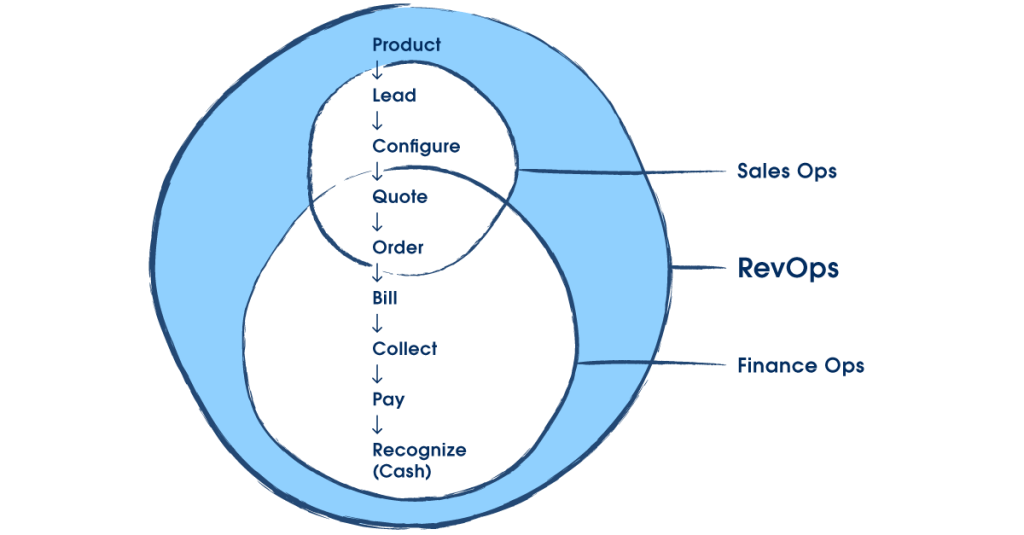
What Ownership Involves
- Approving tools before they get connected
- Maintaining integrations as systems change
- Setting data standards for anything that writes to the CRM
- Reviewing output quality on a schedule
The Review Loop Nobody Builds
Someone has to check what the AI is producing and routing. Pull a sample each week. Read the summaries. Check the routed leads. Spot-check the health scores against what CS actually knows. Without this loop, errors compound for months before anyone notices.
Decision Rights to Settle Early
- Who can buy a new AI tool
- Who can connect a tool to the CRM
- Who can automate a customer-facing action
The Warning Sign
Tools writing to the CRM with no named owner. That’s how data quality quietly collapses. Nobody breaks anything on purpose. Fields just drift until reports stop matching reality.
How to Sequence the Work
This is how AI sales workflows and the rest of the GTM motion should roll out. Resist the urge to do everything at once.
The Order That Works
- Map the current workflow across functions. Include the handoffs. Do it before buying anything.
- Fix definitions and data quality. Every later step inherits them.
- Automate inside one function first. Cross-functional automation fails louder, so earn some wins in a contained space.
- Fix the handoff that leaks the most. One handoff, not four.
- Assign an owner before deploying. Not after something breaks.
- Build the review loop alongside the workflow. Not as a later phase.
Expect this to take quarters. Running parallel projects in every function at once is how you finish none of them.
Realistic First 90 Days
Days 1 to 30: Map workflows and handoffs → Output: A documented current state with the leakiest handoff identified.
Days 31 to 60: Agree definitions and clean core data → Output: Written definitions, one source of truth for accounts.
Days 61 to 90: Fix one handoff and measure → Output: An automated handoff with a baseline and first read on results.
How to Measure Whether Any of This Is Working
Measure the system, not the tools. Here’s a starting set.
- Lead to meeting conversion - Whether the marketing to sales handoff carries enough context.
- Meeting to opportunity rate - Whether qualification is consistent across the handoff.
- Sales cycle length - Whether automation removes friction or adds it.
- Forecast accuracy - Whether shared data is actually reliable.
- Hours per rep on admin - Whether AI saves time or relocates it.
- Net revenue retention - Whether the AE to CS handoff holds up.
- Cost per qualified opportunity - Whether the whole system is getting more efficient.
Watch the Admin Hours Row Closely
If AI hasn’t reduced time spent on non-selling work, the workflow isn’t working, whatever the output volume. Ten times more emails drafted means nothing if reps still spend Friday afternoons fixing CRM fields.
Measure Handoff Conversion Specifically
This guide argues the value sits in the handoffs, so track their conversion rates directly. Lead to meeting and meeting to opportunity are your two best early signals.
Use Your Own Baseline
Compare against your own numbers from before the change. Most published benchmarks are vendor-authored, and they rarely match your market, deal size, or sales motion.
Where AI GTM Workflows Usually Fail
Almost every failed rollout we’ve seen comes down to one of these.
Structural Failures
- Adopting per function with no shared layer. Nothing compounds because nothing connects.
- Letting each team run its own enrichment and ICP definition. You end up with three versions of the truth.
- Nobody owning the AI layer. Integrations rot and nobody notices.
Execution Failures
- Automating handoffs that were never agreed. Bad information arrives faster.
- Over-automating customer-facing actions. Where a mistake is expensive, keep a human in the loop.
- Running projects in every function at once. Teams finish none of them.
Measurement and Expectation Failures
- Measuring tool adoption instead of pipeline and retention. Logins aren’t revenue.
- Expecting AI to solve a positioning or offer problem. It can’t. It will only scale the problem.
If you recognize more than two of these, pause new purchases and go back to the shared layer.
How Cleverly Plugs Into a GTM Motion
Every workflow above assumes enough qualified pipeline is moving through the system to be worth optimizing. For a lot of teams, that assumption is the weak link. We see the pattern often. A GTM leader invests in routing, enrichment, and call summaries, then finds the real constraint was top-of-funnel volume, not process efficiency.
That’s where we come in as a B2B lead generation agency. We run outbound end to end: ICP definition, verified multi-source list building, LinkedIn outreach, cold email, cold calling, and reply handling through to booked meetings. AI handles the repetitive layer. Trained people handle objections, qualification, and judgment calls.
It connects to the handoff standard this guide argues for. We pass over meetings qualified against criteria you agree with us in advance, with context attached, so your AEs skip repeat discovery.
We optimize for qualified meetings held, not activity volume or automation coverage. That approach has helped us generate $312M in client pipeline and $51.2M in closed revenue.
Workflows sorted but pipeline thin? Cleverly builds the top of your funnel. Book a call to see how it fits.
Conclusion
AI improves work inside every GTM function, but the compounding returns come from fixing what happens between them. Shared definitions and clean data set the ceiling on everything else, so they come first. Someone has to own the AI layer, review its output, and maintain the connections.
Your next step is practical. Map your handoffs, pick the one that leaks most, agree the definition, then automate it. Nearly everyone has adopted AI by now. The teams pulling ahead with AI workflows for GTM teams are the ones who connected it, not the ones who bought the most of it.
Frequently Asked Questions
Free Resource
How to Scale a Profitable Cold Call System
Get the complete guide — download it instantly now.

Free Ebook
Download the Free Guide
Enter your details to get instant access.
You're all set! 🎉
Your ebook is downloading now.
Click below if the download didn't start automatically.


