Modified On :
September 2, 2026
Key Takeaways
- A brand strategy that only covers logo, colors, and messaging won't move pipeline. Demand comes from being recalled at the exact moment a buyer's problem surfaces, not from looking polished.
- Brand and demand generation aren't rival budgets fighting for the same dollars. Brand investment makes every demand generation dollar work harder by warming up buyers before they ever see a campaign.
- Mental availability, the odds your brand comes to mind when a relevant buying situation hits, is the real mechanism connecting brand work to revenue. It's measurable, and it predicts purchase behavior better than most awareness metrics.
- Positioning and research have to come before any creative or channel decision. Skip that step and your brand strategy is just a design project wearing a strategy label.
- Brand builds the recall. Something else still has to reach out and turn that recall into a booked conversation, or the demand you built just sits there unclaimed.
We ask B2B marketing leaders the same question a lot: "what's your brand strategy?" Most answer with a deck about logo guidelines, a tone-of-voice doc, and maybe a new tagline. None of that is wrong exactly.
It's just not a strategy that generates demand, and that gap is where a lot of marketing budget quietly disappears.
Only 5% of B2B buyers are in-market at any given moment, according to research from the Ehrenberg-Bass Institute and LinkedIn's B2B Institute. That means a B2B brand strategy built purely for people ready to buy right now is ignoring 95% of your future customers. And by the time the other side of that split shows up, they've often already decided who they're calling first.
Forrester's Buyers' Journey research found that 41% of B2B buyers have a single vendor in mind before they even start the formal purchase process, and 92% arrive with a shortlist already in place.
That's the real job of brand strategy: winning the decision before the buyer knows they're making one. This guide walks through what actually makes a branding strategy for B2B business generate pipeline instead of just looking good, and gives you a practical framework to build one.
It's written for marketing leaders and founders who are done treating brand as a side project and want it tied to real revenue outcomes.
Why Most B2B Brand Strategies Don't Generate Demand
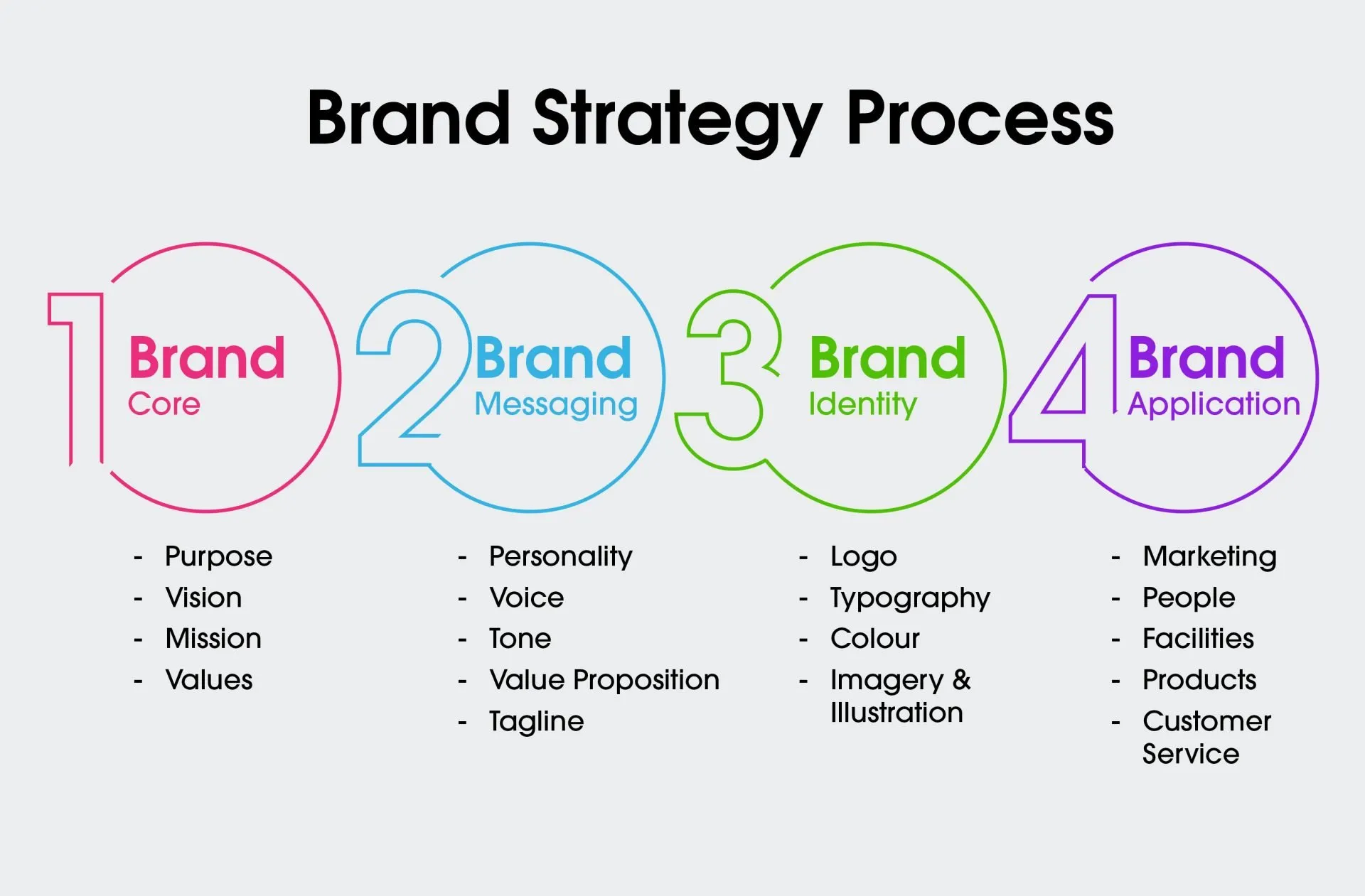
Walk into most brand strategy B2B projects and you'll find the same starting point: a new logo, a refreshed color palette, maybe a slide with three brand pillars. It's treated as a design exercise.
Somebody picks an audience and a positioning statement almost as an afterthought, then hands it to a designer to make it look good.
The problem isn't that design is unimportant. It's that skipping the strategic groundwork means audience and positioning get decided by default, not by research. And once that happens, brand and demand generation end up running as two separate departments instead of one connected system.
Brand posts content nobody reads with intent. Demand gen runs campaigns into a market that's never heard of the company. Neither team's work compounds the other's.
The real mechanism: mental availability
The thing that actually connects brand investment to bookings is mental availability, the likelihood your brand comes to mind at the exact moment a buyer's problem surfaces.
Research from the B2B Institute and the Ehrenberg-Bass Institute shows mental availability is one of the strongest predictors of B2B purchase behavior, not a soft, feel-good awareness metric you report on and move past.
Mental availability works because it builds memory structures that prime a buyer to want to purchase that brand when the moment comes.
This is why "brand awareness" as a vague catch-all isn't useful. What matters is whether your brand is linked, in a buyer's memory, to the specific situation that will eventually push them to buy. Get that link built early, and by the time they're one of the 5% actively evaluating vendors, you're already on the list.
🚀 Build Demand. Start Conversations.
Turn brand awareness into pipeline with LinkedIn, cold email, and cold calling campaigns that generate 15–30 qualified meetings every month.
How to Build a B2B Brand Strategy That Generates Demand (Step by Step)
Brand strategy has to start with research and positioning before anyone touches a creative brief or picks a channel. Skip this order and you're building a brand strategy backwards.
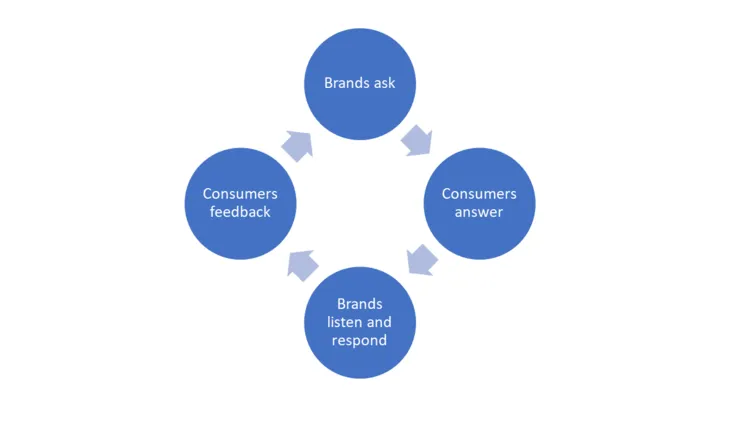
Step 1: Start With Research, Not Design
Before any logo, tagline, or campaign gets discussed, you need a clear picture of how your brand actually shows up in the market today, not how you assume it does.
- Run stakeholder interviews. Talk to leadership, sales, and customer-facing teams. Sales reps hear how prospects actually describe your company, which is usually different from how marketing describes it internally.
- Do a competitive audit. Map out how competitors position themselves so you can see where genuine, defensible differentiation is actually possible, not just where you'd like it to be.
- Map your specific audience. Skip the generic buyer persona template. Define who this brand needs to reach and what that group actually cares about day to day, based on real conversations, not assumptions.
Step 2: Define a Distinct Position, Not a Generic One
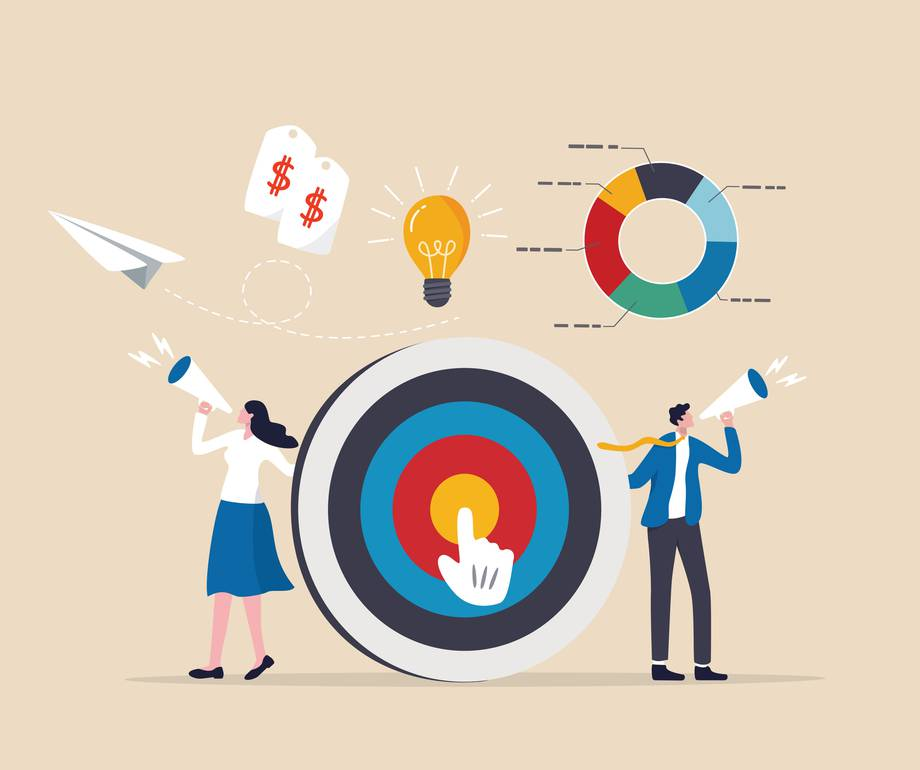
Positioning is the foundation everything else gets built on, and most B2B companies get it dangerously generic.
Your position needs to make a specific, defensible claim about who you're for and why you're different. If a competitor could copy and paste your positioning statement onto their own homepage without anyone noticing, it's not a position. It's noise.
Part of this is category design: deciding what category you're competing in, or creating a new one, shapes how buyers evaluate you against every alternative they consider. A weak or generic position survives fine in a strategy deck. It falls apart the moment it meets a real budget decision or a head-to-head sales conversation.
Step 3: Build Mental Availability With Consistent, Distinctive Assets
Once you know your position, the job becomes making it recognizable and repeatable everywhere your brand shows up.
This isn't just a logo. It's consistent language, tone, and creative patterns that a buyer can recognize even out of context. Repetition matters more than novelty here. Buyers need to encounter the same distinctive signals over and over before they build real recall. Chasing a fresh creative concept every quarter actually works against you.
Inconsistent branding across channels, one voice on LinkedIn, a different one in email, a third one on the website, actively dilutes recognition instead of building it. Every inconsistency is a small tax on your own mental availability.
Step 4: Choose Channels That Build Reach, Not Just Direct Response
Brand-building channels, thought leadership content, industry publications, podcasts, a consistent LinkedIn presence, do the work of building mental availability with buyers who aren't in-market yet.
The catch: these channels won't show the same immediate attribution as a demand gen campaign. There's no last-click conversion to point to. The payoff shows up later, when a buyer finally enters their evaluation window already aware of your brand, which is exactly the outcome that made Forrester's shortlist numbers what they are.
Pro tip: Don't force brand channels to justify themselves with demand gen metrics. They're not the same tool. Measure them on recall and reach, and let demand gen own the conversion metrics.

Step 5: Pair Brand Investment With Active Demand Capture
Brand builds awareness and trust before the buying cycle even starts. Demand generation is what captures that awareness the moment a buyer actually enters an active evaluation.
Here's the part teams miss: awareness alone doesn't convert into pipeline on its own timeline. Without active outbound or inbound capture running alongside your brand building, you're building recall in a buyer's head that never gets acted on, because nobody reached out at the right moment to turn it into a conversation.
Plan these two functions together from the start. If brand and demand generation are built and measured in separate silos, you'll never know which parts of your pipeline actually came from the brand work paying off.
Step 6: Measure What Actually Predicts Revenue Impact
Most brand measurement stops at impressions and reach, which tells you almost nothing about revenue.
Track instead:
- Brand recall in relevant buying situations (mental availability), not generic top-of-mind awareness.
- Share of voice relative to your named competitors, so you know your relative presence in the category.
- Quality of inbound lead sources and win rate against named competitors, the two metrics that actually tie brand investment back to revenue.
If you can't connect a metric back to one of these, it's probably a vanity number.
Common Mistakes When Building a B2B Brand Strategy
We see the same handful of mistakes show up over and over in B2B branding strategy projects, usually because brand work gets rushed, handed to the wrong team, or measured the wrong way. Here's what actually goes wrong, and why it costs more than it looks like at first.
Treating Brand Strategy as a Visual Identity Project
This is the most common one. A company decides it's "time for a rebrand," and the entire project becomes about the logo, the color palette, and a new font pairing. Nobody sits down first to figure out who the brand actually needs to reach or what makes it genuinely different from the five competitors chasing the same buyer.
The result looks fine in a slide deck. It just doesn't do anything. A polished visual identity built on a weak or undefined position is like a beautiful storefront on a street nobody walks down. You'll get compliments on the design and no movement in pipeline, because design was never the part of brand strategy that drives demand in the first place.
Expecting Brand Channels to Show the Same Attribution as Demand Gen
Marketing leaders under pressure to prove ROI often apply demand gen logic to brand-building work. They want to see a campaign, a click, and a conversion within the same quarter. When a LinkedIn thought leadership push or a podcast sponsorship doesn't produce an immediate spike in form fills, the instinct is to call it a failure and pull the budget.
That's the wrong read. Brand channels are built to create recall with buyers who aren't ready to purchase yet, sometimes for months. The payoff shows up later, when that buyer finally enters an active evaluation and your name is already on their shortlist.
Judging a brand channel by direct-response metrics is like judging a savings account by its returns after one week. You're measuring the wrong timeline, and killing the budget too early cuts off the compounding effect before it has a chance to show up in the numbers that matter.
Building Brand and Demand Generation as Separate, Uncoordinated Functions
In a lot of B2B companies, brand and demand generation sit in different corners of the marketing org, run by different people, with different goals, different calendars, and sometimes different agencies.
Brand publishes content nobody in demand gen ever references. Demand gen runs outbound campaigns into segments the brand team has never touched with any awareness-building content.
When these two functions don't talk to each other, they don't reinforce each other either. You end up running cold outbound into a market that's never heard of you, which tanks reply rates, while your brand content builds recall with an audience that never gets a direct outreach touch to convert it. Every dollar spent this way works in isolation instead of compounding.
The fix isn't more budget for either team. It's a shared plan where brand builds the recall and demand generation, including outbound, is deliberately timed to reach the same accounts once that recall exists.
Measuring Brand Investment Purely on Awareness Metrics
Impressions, reach, and follower counts are the easiest numbers to report, which is exactly why so many teams default to them. They go up reliably with enough ad spend, they look good in a quarterly review, and they require zero hard conversations about whether the brand strategy is actually working.
The problem is none of those numbers tell you whether the brand is winning deals. A brand can rack up huge impression counts and still lose every competitive deal it's shortlisted for, because impressions don't measure whether the brand is remembered at the moment a buyer needs to make a decision.
Without tracking mental availability, win rate against named competitors, or the quality of inbound leads actually attributable to brand awareness, you're reporting activity, not impact. Teams that only track awareness metrics tend to keep funding a brand strategy that isn't working, simply because the vanity numbers never stop climbing.
📈 Turn Attention Into Pipeline
With 53,000+ meetings booked and $312M+ in pipeline generated, Cleverly helps 10,000+ businesses turn market attention into predictable growth.
How Cleverly Converts Brand-Driven Demand Into Booked Meetings
A strong B2B brand strategy builds mental availability. That's the hard part, and most companies stop right there, assuming the recall alone will translate into inbound interest. In practice, buyers rarely reach out on their own the moment that recognition kicks in. Someone still has to make the direct connection between "I remember that brand" and an actual booked conversation.
This is the gap we built Cleverly to close.
As a done-for-you B2B lead generation agency, we run LinkedIn outreach, cold email, and cold calling that reaches buyers who already recognize your brand, and turns that recognition into an actual meeting on the calendar instead of leaving it to inbound chance.
Brand strategy creates the conditions for demand to exist. Outreach is what actively captures it before a competitor's SDR gets there first.
We've helped generate $312M+ in client pipeline and 224,700+ leads for companies across nearly every B2B industry, working accounts that had mental availability but no dedicated motion converting it into pipeline. If you're investing in brand-building content and presence and want a system that turns that recognition into booked calls, our outreach services are built exactly for that handoff.
Building brand recognition but need it turned into booked meetings? Book a strategy call with Cleverly!
Conclusion
A B2B brand strategy generates demand when it's built on real research and a distinct position, not a visual identity refresh. Mental availability, being the brand that comes to mind at the right moment, is the actual mechanism connecting brand investment to purchase behavior, and it's measurable if you're tracking the right things.
Brand and demand generation work best as one connected system: brand builds the recall, demand generation and active outbound capture convert it into pipeline. A brand strategy without a capture mechanism behind it isn't a finished strategy. It's demand sitting on the table, waiting for someone else to pick it up first.
Frequently Asked Questions
Free Resource
How to Scale a Profitable Cold Call System
Get the complete guide — download it instantly now.

Free Ebook
Download the Free Guide
Enter your details to get instant access.
You're all set! 🎉
Your ebook is downloading now.
Click below if the download didn't start automatically.