Table of Contents
Who Is a Gatekeeper in Sales?
Two Types of Gatekeepers You'll Run Into
Why Most Reps Fail to Get Past the Gatekeeper
The Mindset Shift: Treat the Gatekeeper as an Ally
10 Proven Techniques to Get Past the Gatekeeper
Gatekeeper Cold Calling Scripts (Word-for-Word)
Gatekeeper Objection Handling: What They Say and How to Respond
Mistakes That Get You Permanently Blocked
How to Track and Improve Your Gatekeeper Pass Rate
How Cleverly's Cold Calling Service Gets You to Decision-Makers
Conclusion
Frequently Asked Questions
Modified On :
September 7, 2026
Key Takeaways
- Getting past the gatekeeper isn't a trick, it's a repeatable process built on research, tone, and a clear reason for calling, not luck or manipulation.
- The biggest mindset shift that moves the needle: stop treating the gatekeeper as an obstacle and start treating them as an internal ally who can actually help you reach the right person.
- Most failed attempts come down to a handful of avoidable habits: sounding scripted, leading with a pitch, or calling without knowing who you're actually trying to reach.
- The strongest lever on this list is a referral or name-drop, not a clever script. It removes the screening step entirely because it reframes the call as expected, not cold.
- Pass-through rates improve when you treat gatekeeper handling like a metric you track and coach, not a one-off skill you either have or don't.
Did you know it takes an average of 18 dials just to connect with a decision-maker? And 71% of reps say getting past gatekeepers is their biggest hurdle in cold calling. That's not a small friction point. That's the entire game.
And the challenge isn't going away. HubSpot data shows the top reported reasons calls stall out are initial rejection at 44%, gatekeepers at 40%, and difficulty reaching decision-makers at 40%.
If you're running any kind of outbound calling program in 2026, you're going to run into a front desk, an EA, or a phone screener before you ever get to the person who can say yes.
Here's the part most training programs skip: the gatekeeper isn't the problem, your approach usually is. Reps who try to bulldoze, trick, or talk over gatekeepers get remembered, and not in a good way. They get flagged, and that account is closed to them for good.
Reps who treat the front line with respect and a clear reason for calling get transferred, and often become the vendor the gatekeeper actually recommends.
This guide breaks down who gatekeepers really are, why most cold calls die before they start, 10 field-tested techniques, word-for-word scripts you can use today, how to handle common objections, and the mistakes that get you permanently blocked.
If you're an SDR, BDR, founder doing your own outbound, or you manage a cold calling program, this is built for you.
Who Is a Gatekeeper in Sales?
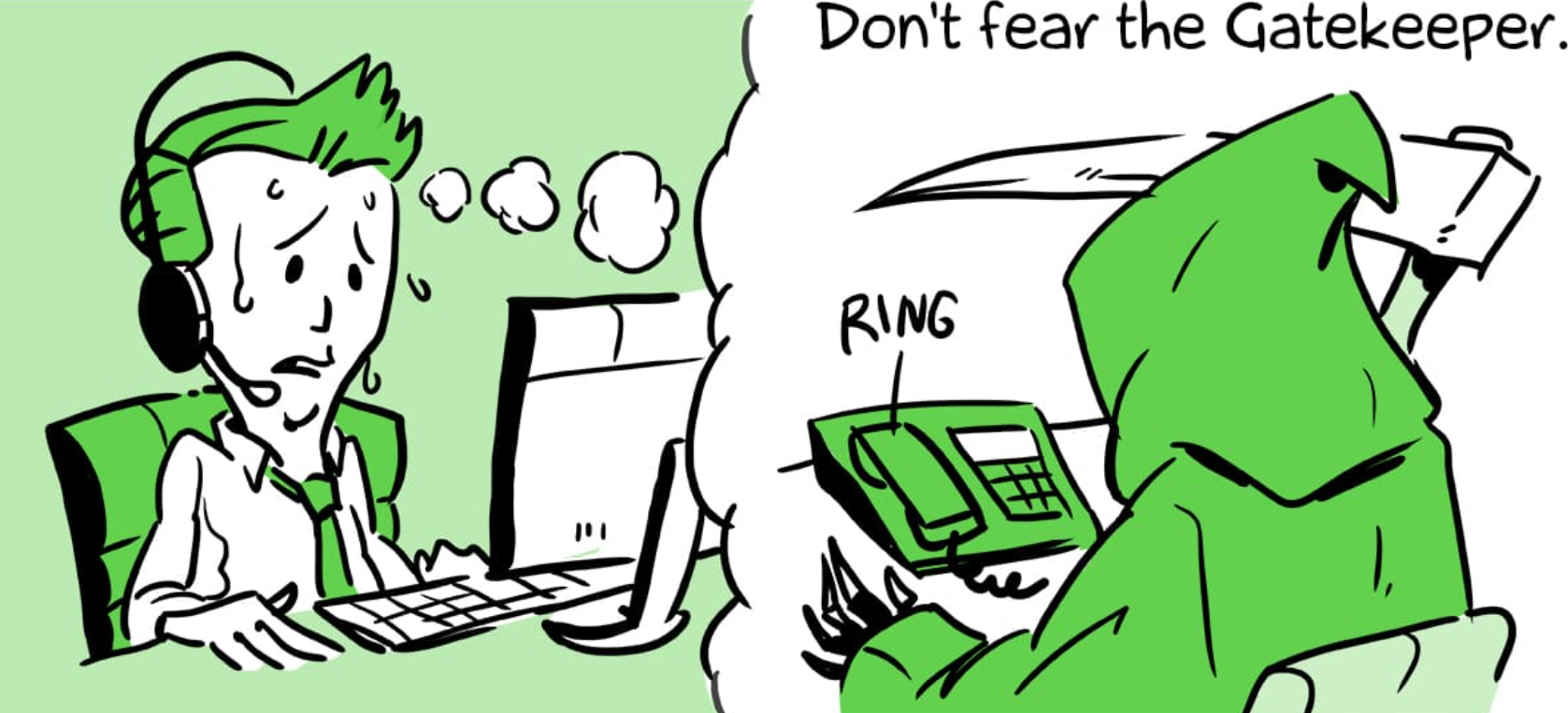
A gatekeeper is anyone who controls access to the decision-maker before you get a shot at the actual conversation. That includes receptionists, executive assistants, office managers, front-desk staff, and phone screeners.
Here's the thing most reps get wrong about them: gatekeepers aren't hired to block salespeople. They're hired to protect their executive's time and filter out noise that doesn't deserve attention.
The moment you understand that, your entire approach to the call changes. You stop trying to sneak past someone doing their job and start giving them a reason to let you through.
📞 Reach Decision-Makers. Book More Meetings.
Our done-for-you cold calling campaigns generate 15–30 qualified meetings every month with targeted B2B prospects.
Two Types of Gatekeepers You'll Run Into
Human gatekeepers are the live screeners you talk to on the phone: receptionists, EAs, office managers.
Digital gatekeepers are the automated layers standing between you and a human: IVR menus, extension directories, voicemail walls, and switchboards. These need a slightly different playbook (more on that later), but the same core principle applies. You need a clear, credible reason to move forward.
Gatekeepers Carry More Influence Than You Think
Here's what most reps miss. Many gatekeepers are trusted advisors to their executive. They get asked, "did anyone worth talking to call today?" They can quietly advocate for you or just as quietly make sure you never get through again. That influence is exactly why the goal isn't to get around the gatekeeper. The goal is to give them a reason to put you through.
Why Most Reps Fail to Get Past the Gatekeeper
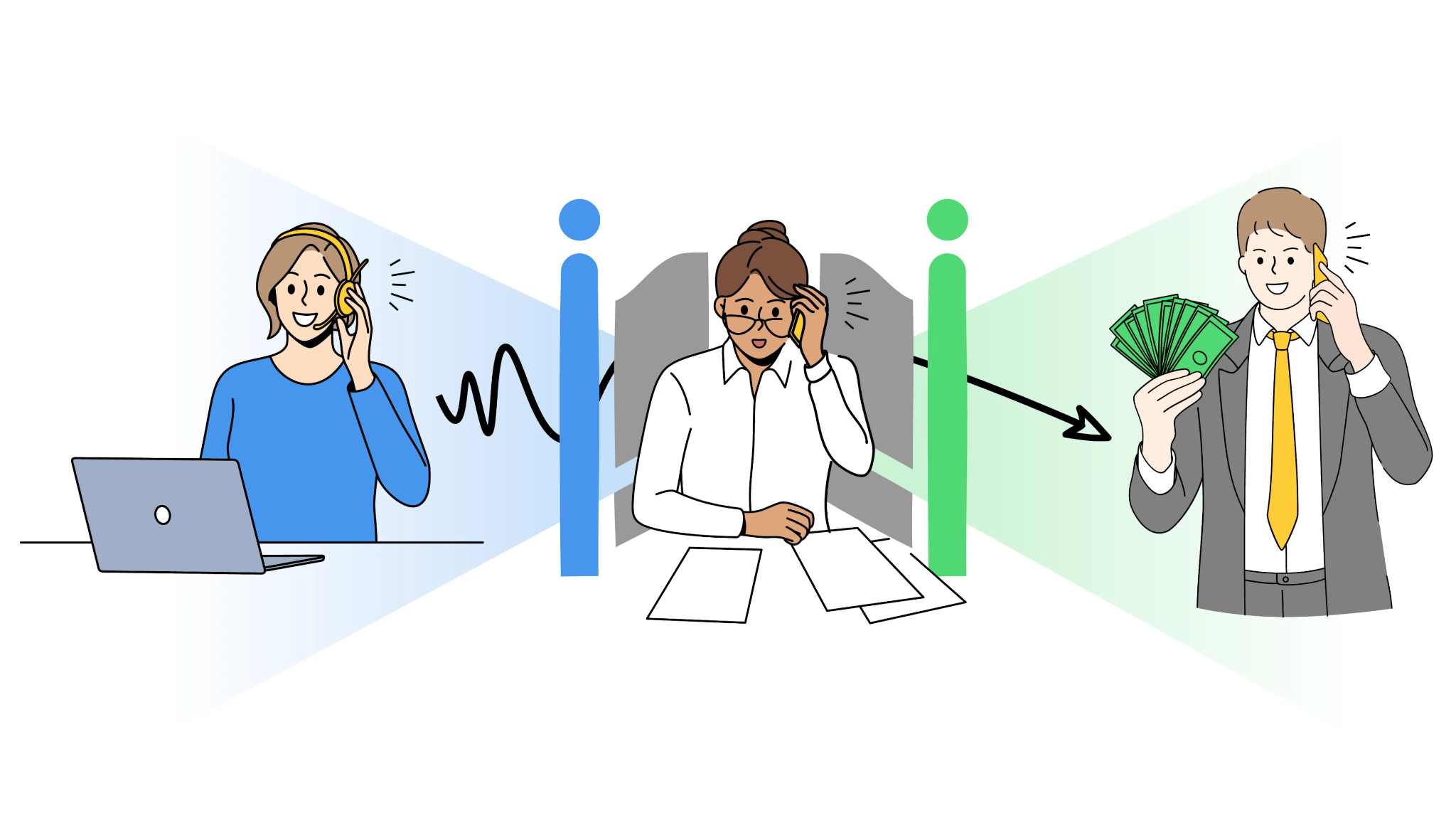
Before you can fix a pass-through problem, you need to see where it's actually breaking. Most failures trace back to one of these habits.
Sounding scripted or nervous. Gatekeepers screen dozens of calls a week. They can spot a cold pitch by tone alone, often within the first few seconds.
Leading with a pitch instead of a reason. The moment you start describing your product, you've told the gatekeeper exactly what you are: a salesperson to screen out.
Trying to trick or manipulate your way through. Fake urgency, pretending to be a customer, or claiming a relationship that doesn't exist might work once. It burns the account permanently the moment it's caught.
Calling with zero research. Not knowing the decision-maker's name or title is the fastest way to sound like a spray-and-pray dial, and gatekeepers know exactly what that sounds like.
Asking weak, easily-blocked questions. "Who handles marketing over there?" hands the gatekeeper an easy, polite reason to end the call before it starts.
Calling at the worst possible times. Mid-morning weekdays are when gatekeepers are fully staffed and actively screening. You're calling into the teeth of the defense.
Getting defensive or frustrated when screened. This guarantees you don't get through on the next attempt either, because now you're the rep who was rude.
The pattern across all seven is the same: these are all rep-side behaviors, not gatekeeper-side obstacles. That's actually good news, because every one of them is fixable with preparation and practice.
🚀 Turn Cold Calls Into Pipeline
With 1M+ cold calls, 53,000+ meetings booked, and $312M+ in pipeline generated, Cleverly helps 10,000+ businesses build predictable outbound growth.
The Mindset Shift: Treat the Gatekeeper as an Ally
This is the single highest-leverage idea in this whole guide. Respect and transparency consistently outperform manipulation, and making this shift alone lifts pass-through rates more than any individual script or tactic.
Here's why it works. Gatekeepers frequently influence vendor decisions. They flag which calls were worth their executive's time and which vendors felt professional versus pushy.
When you're pleasant, clear, and honest, you're not just getting past one gatekeeper on one call. You're building a reputation that follows you into every future call to that account.
Asking for help also just works better than talking around someone. People are wired to want to assist when asked directly and politely.
The moment you ask, "can you point me in the right direction?" instead of trying to talk your way past them, you've repositioned the gatekeeper from screener to guide.
Consistency matters here too. Learn their name. Thank them, genuinely, every time. Be pleasant on the second and third call even if you got screened on the first. That turns a single account from a wall you keep hitting into a reliable access point you can count on.
Two Mindsets, Two Outcomes
10 Proven Techniques to Get Past the Gatekeeper
These aren't theories. They're field-tested tactics working SDRs use every day to reach decision-makers.
1) Do Your Research Before You Dial
Know the decision-maker's full name, exact title, and one specific, relevant reason you're calling them. A single detail, a recent hire, a funding round, a product launch, an expansion into a new market, is enough to sound legitimate. Never open with "who handles X?" It immediately identifies you as a cold caller with no context.
Example: "Hi, this is [name] calling for Sarah Miller. I saw the news about your Series B last week, this is actually related to that."
2) Ask for the Decision-Maker by First Name
Using just the first name signals familiarity and implies an existing relationship. Deliver it as a calm statement, not a question. "Hi, is Sarah in?" outperforms "Can I please speak to Sarah Miller in marketing?" every time.
Avoid over-explaining. Confident brevity gets transferred more often than a long-winded ask.
3) Control Your Tone and Pace
Speak slowly, warmly, and with relaxed authority. Rushed or high-pitched delivery reads as nervous and triggers the screening reflex instantly. Sound like someone who expects to be put through, because that's exactly how internal colleagues and existing partners sound on the phone.
Practical tips that actually help: stand up while calling, smile before you dial, and take one breath before the gatekeeper picks up.
4) Give a Clear, Honest Reason for the Call
Have a one-sentence reason ready that focuses on an outcome or problem, not a product name. Vague or evasive answers are the fastest way to get blocked, gatekeepers are trained to catch them. The reason should sound researched but stay short enough that it never turns into a pitch.
Example: "I'm calling about how your team is handling [specific challenge], not trying to sell anything on this call."
5) Ask the Gatekeeper for Help
Phrases like "I'm hoping you can point me in the right direction" invite cooperation instead of resistance. Position them as the internal expert who actually knows who owns what, because most will genuinely help once you ask directly.
This also surfaces useful intel you wouldn't get otherwise: the right contact, the best time to call back, or whether the decision-maker even handles that area at all.
6) Reference a Prior Touchpoint
Mentioning an email, a LinkedIn message, an event, or a webinar turns your call into a follow-up instead of a cold call. Only use this when it's actually true.
A false reference gets caught fast and destroys your credibility on that account permanently. This is exactly why sequencing email or LinkedIn touches before your first call matters so much.
7) Use Referrals and Name-Drops
An internal referral removes the screening step entirely. "John in ops suggested I reach out to Sarah" changes the entire dynamic of the call. Mutual LinkedIn connections, existing customers, or well-known clients in the prospect's space all work the same way.
This is the single strongest lever on this list. Source referrals systematically by asking happy customers for warm intros into their network, and by mapping mutual connections before you dial.
8) Call Outside Gatekeeper Hours
Before 8am, during lunch, and after 5pm are windows when gatekeepers often aren't at their desk. Decision-makers frequently pick up their own line during these times. Treat this as a testable variable, not a guaranteed rule. Track your results by time block and let the data tell you what works for your specific list.
9) Build a Real Relationship Over Multiple Calls
Remember and use the gatekeeper's name. Thank them genuinely. Stay consistent and pleasant across every attempt, even the ones where you get screened.
For high-value or multi-touch accounts, a gatekeeper who recognizes your voice becomes an internal advocate over time. Small courtesies compound. This is a long-game tactic, and it pays off most on the accounts you actually care about winning.
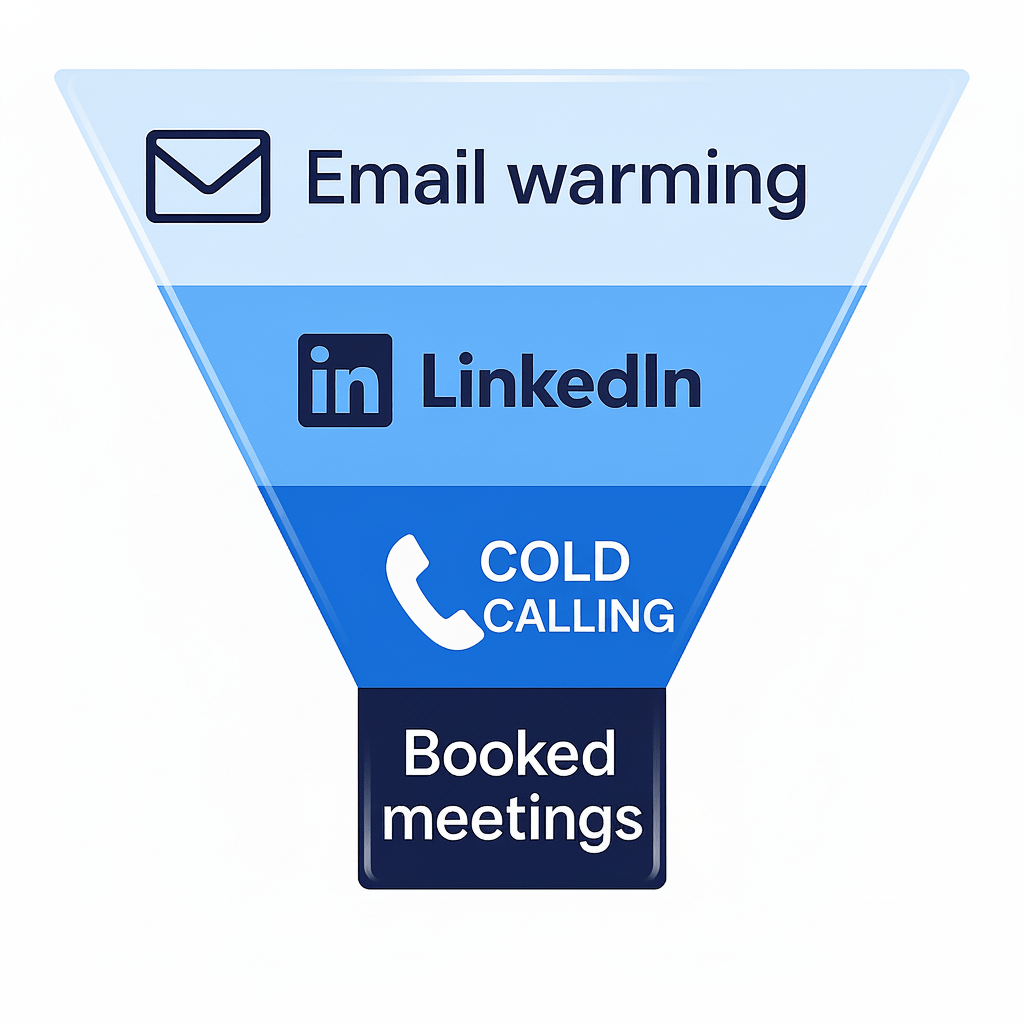
10) Combine Cold Calls With Email and LinkedIn
Warming the prospect first means your name is already recognized when you call. A prospect who's seen your email is far more likely to accept the transfer than one hearing your name for the first time.
Multichannel outreach turns cold calls into expected calls, which is the entire goal of everything in this section.
Gatekeeper Cold Calling Scripts (Word-for-Word)
Here are five scripts you can copy, paste, and adapt today. Each one has a note on when it works best and what to avoid.
Script 1: The Direct Ask
"Hi, is Sarah in?"
When it works: Researched accounts where you know exactly who you're asking for.
Avoid: Over-explaining after the ask. The shorter it is, the more it sounds like an internal call.
Script 2: The Help Request
"Hi, I'm hoping you can point me in the right direction. I'm trying to find out who on your team handles [specific area]. Would that be Sarah, or is there someone else I should be talking to?"
When it works: You're unsure exactly who owns the problem you solve.
Avoid: Pairing this with a hidden pitch. It only works because it's honest.
Script 3: The Follow-Up Reference
"Hi, this is [name]. I sent Sarah an email last week about [specific topic] and wanted to follow up by phone. Is she available?"
When it works: You're running a genuine multichannel sequence.
Avoid: Using this if the prior touchpoint isn't real. It backfires immediately if the gatekeeper checks.
Script 4: The Referral Introduction
"Hi, this is [name]. John in your ops team suggested I give Sarah a call. Is she around?"
When it works: Any account where you have even a small warm thread.
Avoid: Nothing to avoid here, this has the highest pass-through rate of any script type on this list.
Script 5: The Voicemail Fallback
"Hi Sarah, this is [name] calling about [specific outcome or problem]. I'll follow up with a quick email so you have my info, but wanted to give you a call directly first. Talk soon."
When it works: Every time the transfer doesn't happen and you land in voicemail.
Avoid: Treating this as a pitch. Treat it as a setup for your next touch, not the close.
Gatekeeper Objection Handling: What They Say and How to Respond
Objections from gatekeepers aren't rejections, they're screening questions. Respond to the concern behind the question, not the words on the surface.
A few of these deserve extra context. When a gatekeeper asks "what is this regarding," your answer sets the tone for the entire call, so it needs to sound like a reason, not a hook.
"Send me an email" feels like a brush-off, but agreeing readily and following with one soft question ("happy to, is Sarah the right person for [topic] or should I loop in someone else?") often keeps the door open instead of closing it.
And when you hear "we're not interested," resist the urge to argue. Most of the time, that response is coming from someone who genuinely isn't the buyer, not a hard no from the actual decision-maker.
The underlying principle across every row: don't fight the objection, respond to the concern behind it. Staying calm and courteous under a hard no preserves your future access to that account, which matters more than winning any single call.
Mistakes That Get You Permanently Blocked
Some mistakes cost you one call. These cost you the account.
1. Lying about who you are or why you're calling, or claiming a relationship that doesn't exist. It's a short-term win that permanently costs you the account once it's discovered.
2. Being rude, condescending, or pushy when screened. This gets your number and your company flagged internally, sometimes shared across the whole front-desk team.
3. Calling repeatedly with the same pitch and no new reason or value. Gatekeepers remember, and repetition without a fresh angle reads as desperation.
4. Reading a script word-for-word without adapting to what the gatekeeper actually says. A script is a starting point, not a transcript to recite regardless of the conversation.
5. Over-explaining your offer to someone who isn't the buyer. Every extra sentence gives them another reason to say no on your behalf.
6. Never learning or using the gatekeeper's name. This keeps you permanently in the "anonymous cold caller" bucket instead of building any kind of recognition.
7. Treating every account the same instead of adjusting your effort based on account value. Your highest-value targets deserve the relationship-building approach from technique 9, not a one-shot dial.

How to Track and Improve Your Gatekeeper Pass Rate
Most teams bury gatekeeper performance inside overall connect rate, which hides exactly where the real problem is. Your gatekeeper-to-decision-maker pass rate deserves its own metric.
Log this per call:
- Which objection came up
- Which response the rep used
- Whether the transfer actually happened
Then test one variable at a time: opener phrasing, call time, or reason-for-call framing. Change more than one thing at once and you'll never know what actually moved the number.
Call recording and review matter here more than almost anywhere else in the cold calling process. Tone and pacing issues are nearly impossible to self-diagnose in the moment, but they're obvious the second you listen back.
And often, the real fix isn't a script problem at all. Bad contact data means reps waste calls on switchboards that were never going to convert, no matter how good the opener is. Fixing your data source can move your pass rate more than any technique on this list.
A simple habit that works: track pass rate weekly, per rep. It's the earliest signal you'll get that someone needs coaching, well before it shows up in booked meetings.
How Cleverly's Cold Calling Service Gets You to Decision-Makers
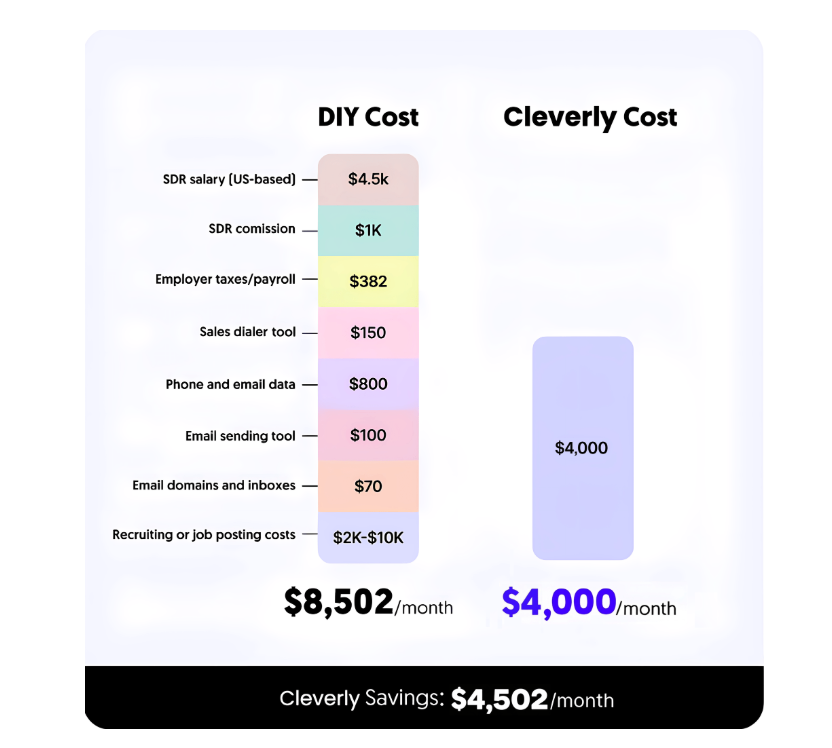
Getting past gatekeepers consistently is a skill built through volume and coaching, and most in-house teams never make enough calls to develop it.
A rep making 20 dials a day is learning slowly. A rep making 200 to 300 dials a day is learning fast, and that's the gap most internal cold calling programs never close.
We run this end-to-end at Cleverly, starting upstream of the actual dial. That means verified direct-dial data and ICP-aligned target lists, so reps spend less time hitting switchboards that were never going to convert in the first place.
From there, trained SDRs work tested call frameworks that have been refined across thousands of live calls, not guessed at from a training manual. Every rep gets coached on their own call recordings, which is exactly the kind of feedback loop most internal teams don't have the bandwidth to run consistently.
We've placed 1M+ cold calls and set 53K appointments, and that scale is what lets us optimize for the outcome that actually matters: booked, qualified appointments with real decision-makers, not raw dial volume or vanity activity metrics.
It's the difference between a rep learning gatekeeper handling on the job, one flagged account at a time, and a team that already does it daily at scale.
Want your calls landing with decision-makers instead of front desks? Book a strategy call with Cleverly.
Conclusion
Gatekeepers respond to respect, clarity, and confidence, not tricks or persistence alone. That's the entire thesis of this guide, and it holds up whether you're making 20 calls a day or 300.
Most of your outcome gets decided before you even dial. Research, a clear one-sentence reason for the call, and accurate contact data matter more than any clever line you could say once someone picks up. Consistency and relationship-building beat one-off tactics too, especially on the high-value accounts where a single gatekeeper relationship can open doors for years.
Teams that treat gatekeeper handling as a trainable, measurable skill book far more meetings than teams that treat it as an annoyance to push through. Start tracking your pass rate this week, and you'll know within a month exactly where your calls are actually breaking down.
Frequently Asked Questions
Free Resource
How to Scale a Profitable Cold Call System
Get the complete guide — download it instantly now.

Free Ebook
Download the Free Guide
Enter your details to get instant access.
You're all set! 🎉
Your ebook is downloading now.
Click below if the download didn't start automatically.