Table of Contents
What Is GTM Engineering?
Manual Go-to-Market vs. Engineered Go-to-Market
Why Demand for GTM Engineering Is Growing So Fast
GTM Engineer Responsibilities
How GTM Engineering Differs from RevOps, Sales Ops, and SDRs
What a GTM Engineer Actually Builds
The GTM Engineering Stack
Best Growth Engineering Software for GTM
What to Look for in GTM Engineering Software
How to Start Doing GTM Engineering
Best-Rated Growth Engineering Companies for GTM
Cleverly: Best for Getting GTM Engineering's Outbound Results Without Building the System
Don't Have a GTM Engineer? Here's How Cleverly Runs the Outbound Layer for You
Conclusion
Frequently Asked Questions
Modified On :
September 4, 2026
Key Takeaways
- GTM engineering treats go-to-market as a system you build once and run forever, not a set of manual tasks you staff up to handle.
- The role differs from RevOps and SDR work in one core way: a GTM engineer's output is a running workflow, not a maintained process or a completed task.
- Every GTM engineering build follows the same order: clean data first, a scoring or modeling layer second, an automated activation step third.
- Skipping the data foundation to jump straight to outreach automation is the most common reason these systems break down.
- Companies without an internal GTM engineer can still get the outbound results of one, either by buying software and building it themselves or by partnering with an agency that already runs the execution layer as a service.
Most go-to-market teams aren't under-staffed. They're under-engineered. Reps are still opening a dozen tabs to research one account, marketing is still exporting spreadsheets to dedupe by hand, and none of that gets fixed by hiring two more SDRs. It gets fixed by building a system that does the work automatically.
That's the gap GTM engineering fills.
GTM engineer job postings grew 205% year-over-year from 2024 to 2025 based on an analysis of 1,000 listings, and by early 2026 there were more than 3,000 open roles across major job boards.
Median advertised base pay sits around $127,500, with senior practitioners clearing $240,000 at AI-native companies. This isn't a trending job title. It's a genuine shift in how revenue teams are structured.
This guide covers what GTM engineering actually is, what the role is responsible for day to day, why demand is climbing so fast, and which software and companies operate in this space right now.
If you're in RevOps, growth, or sales leadership trying to decide whether to build this function internally or bring in outside help, this is written for you.
What Is GTM Engineering?
GTM engineering is the practice of building automated revenue systems using AI, data, and workflow automation, instead of running go-to-market motions by hand.
The distinction that matters is the unit of work. A traditional ops hire researches one account and drafts one follow-up email. A GTM engineer builds the workflow that does that same research and drafting for every account in your pipeline, automatically, without anyone touching it after setup.
Success isn't measured in tasks completed. It's measured in meetings booked and hours saved. That's a different scoreboard than most revenue operations roles have used, and it's part of why the title keeps getting attached to different jobs at different companies.
The role itself is young. It emerged around 2023, when Clay's own team and early operators at companies like Cursor, Lovable, and Webflow started using the term to describe engineers who built go-to-market infrastructure instead of product.
Since then, new listings have appeared at a fast, steady pace across B2B tech, and the title has started showing up under aliases like "Revenue Systems Engineer" or "Growth Engineer" depending on the company.
🚀 Build a Smarter GTM Engine
Turn better data and automation into real conversations with LinkedIn, cold email, and cold calling campaigns that generate 15–30 qualified meetings every month.
Manual Go-to-Market vs. Engineered Go-to-Market
The easiest way to understand GTM engineering is to compare the same job done two ways.
1. Account research. A rep opens a dozen tabs, checks a company's site, LinkedIn, and funding history, then takes notes by hand. An engineered version runs the same research automatically for every account on your list and drops the output straight into a briefing doc.
2. List building. Manually exporting a spreadsheet, deduping it by scanning for duplicate rows, and cross-referencing against your CRM takes hours per list. An automated enrichment pipeline does the same dedupe and cross-reference on thousands of records in minutes.
3. Lead qualification. A rep eyeballs job titles and company size to decide who's worth a follow-up. A lead scoring system applies the same qualification logic consistently, at scale, without getting tired or inconsistent on a Friday afternoon.
The shift here isn't "do the manual work faster." It's moving from doing the motion to building the thing that does the motion. That's the whole idea behind engineering a go-to-market function instead of staffing it.
Why Demand for GTM Engineering Is Growing So Fast
For years, the growth playbook was simple: more headcount equals more pipeline. That stopped scaling once outbound tactics got commoditized and buyers grew numb to generic outreach. Adding another SDR to send the same templated sequence everyone else is sending doesn't move the needle the way it used to.
AI collapsed the cost of the research and workflow-building that used to require a developer, or a week of manual labor, to pull off. One person with the right workflow can now do go-to-market work that previously needed a much larger team. That changes the underlying economics of scaling revenue, not just the tools you use to do it.
The broader RevOps category has grown from an estimated 5,800 professionals in early 2022 to well over 100,000 by 2024, with GTM engineers representing the technical specialization inside that expansion. This is a bottom-up shift, driven by operators solving real bottlenecks, not a top-down mandate from the C-suite.
📈 Turn GTM Into Pipeline
With 53,000+ meetings booked and $312M+ in pipeline generated, Cleverly helps 10,000+ businesses turn smarter outbound systems into predictable growth.
GTM Engineer Responsibilities
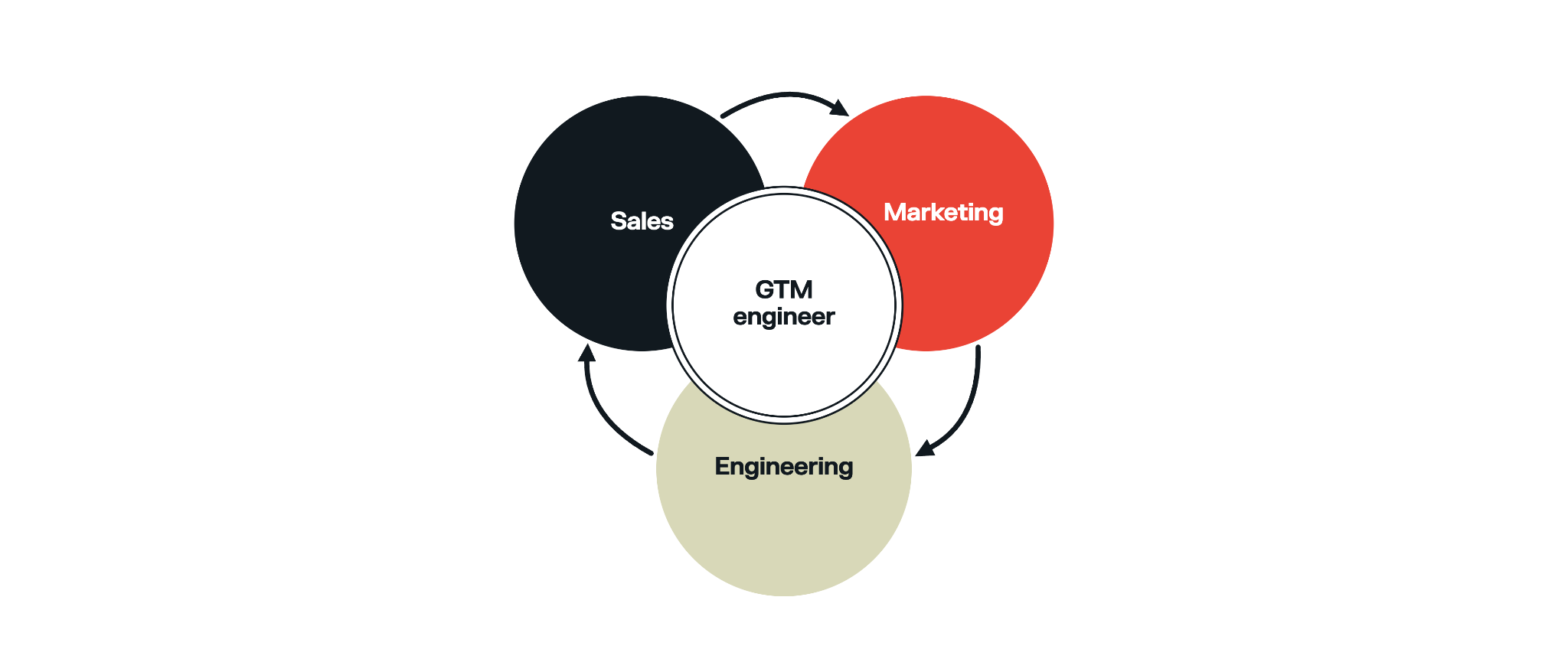
The responsibilities of a GTM engineer span any revenue-critical function, not one fixed department. What ties the work together is the pattern: find a manual bottleneck, build the system that removes it.
Building Outbound Systems
This means sourcing lists, verifying emails, and setting up the triggers that let outbound campaigns run without manual intervention. Once built, the system sources new contacts, checks deliverability, and launches sequences on its own schedule.
Signal-to-Action Workflows
This responsibility covers identifying intent signals, a job change, a website visit, a funding announcement, and automatically triggering personalized outreach in response. The value is speed. A signal that sits unread in a dashboard for three days is worth far less than one that triggers an email within the hour.
CRM Hygiene and Data Foundation
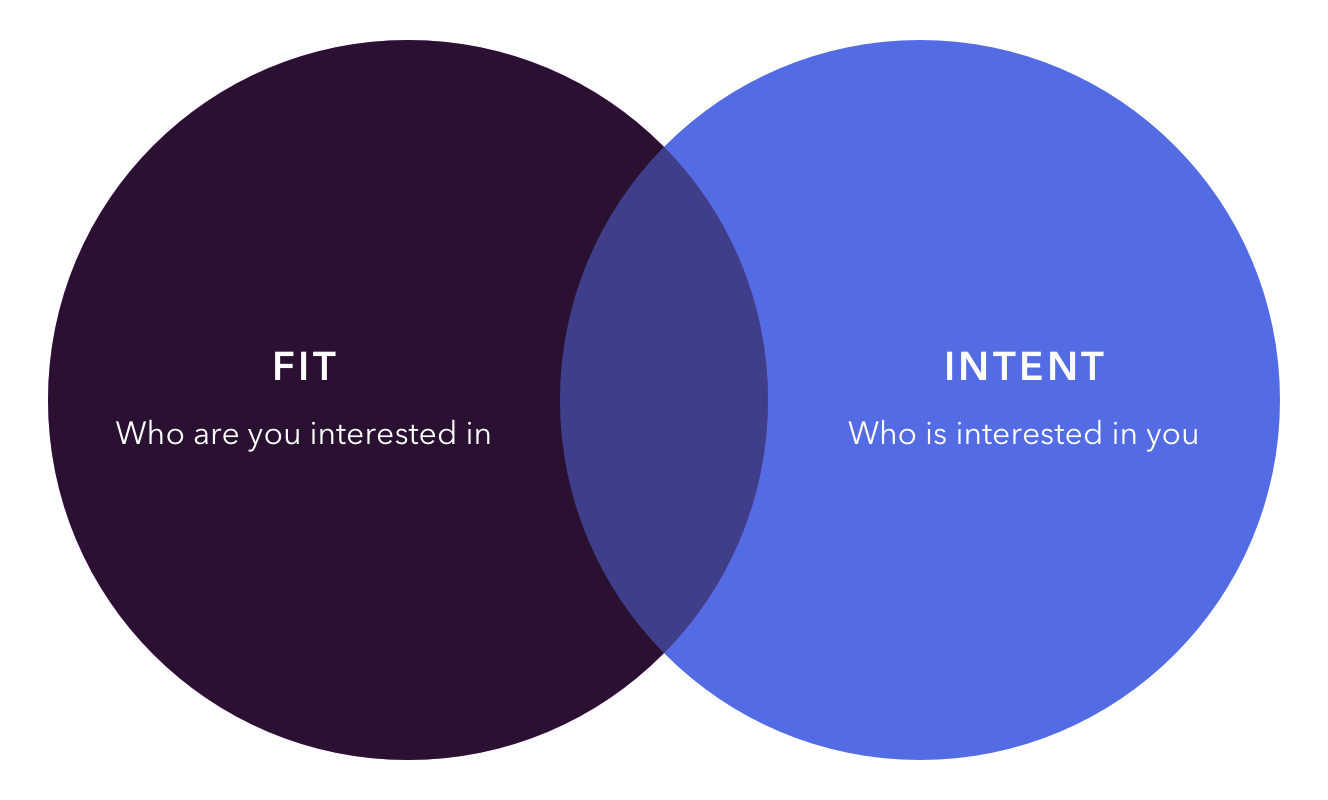
A GTM engineer automates deduplication, enrichment, and lead routing to keep CRM data clean and trustworthy. Most teams stumble here first. Running sophisticated campaigns on top of dirty data undermines everything built above it, no matter how good the outreach copy is.
Account Intelligence and Research at Scale
GTM engineers compile automated pre-call briefs and account research that used to take a rep an hour or more per account, and run it across every record in the pipeline automatically. The rep still makes the call. They just show up already knowing the account.
How GTM Engineering Differs from RevOps, Sales Ops, and SDRs
The real difference between these roles isn't the tools they touch. It's the deliverable. A GTM engineer ships a running system. Everyone else maintains a process or completes a task.
That last row is the whole point. A RevOps hire who fixes a routing error is doing valuable work, but they're maintaining something that already exists.
A GTM engineer who notices the same routing error builds a workflow that catches and fixes that class of error automatically, going forward, without anyone opening a ticket.
What a GTM Engineer Actually Builds
Most GTM engineering systems break down into three layers, and understanding what each one actually contains is the difference between hiring for the role and just hiring another automation-curious ops person.
Foundation layer: the part nobody brags about.
This is deduped, enriched, standardized records, and it's where 80% of a GTM engineer's early hours actually go, even though it's the least visible part of the job.
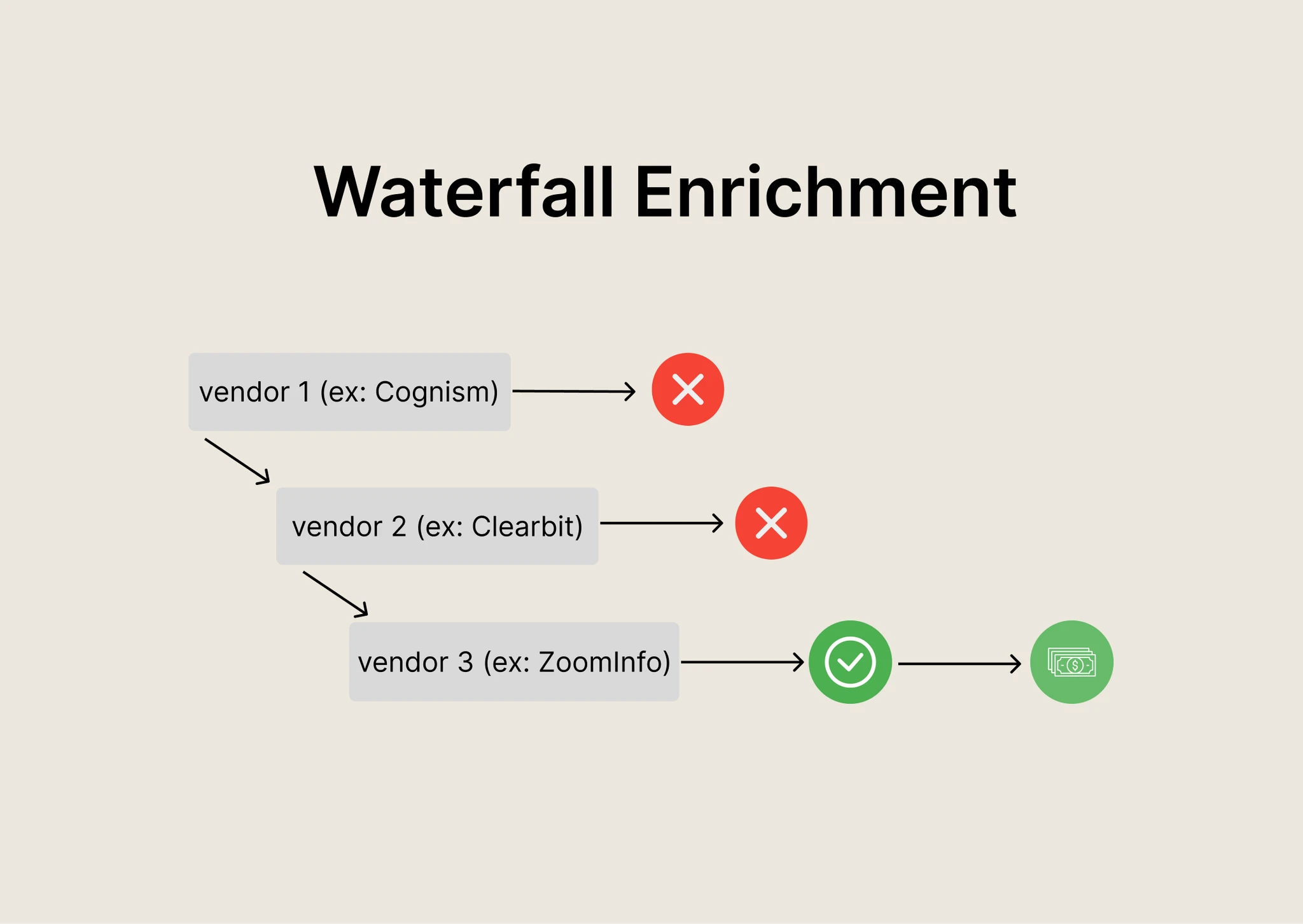
In practice, this means writing matching logic that catches "Acme Inc." and "Acme, Inc" as the same account, building waterfall enrichment that queries a second and third data provider when the first one returns no email, and setting up scheduled jobs that re-verify contact data every 30 to 60 days so lists don't quietly rot.
A foundation layer that's actually done well includes a source-of-truth field for every critical property (one system decides what a contact's title "really" is when three tools disagree) and a confidence score on enriched data, so downstream workflows can treat a verified email differently than a guessed one.
Modeling layer: where judgment gets turned into logic.
This is the layer that decides which of your 50,000 enriched contacts are worth acting on right now. A fit score usually combines firmographic filters (headcount, industry, tech stack) with behavioral signals (a pricing page visit, a job change, a funding announcement) into a single weighted number.
Good GTM engineers build this as a living model, not a one-time scoring formula. They log which scored accounts actually converted, adjust the weights quarterly, and flag when a signal that used to predict pipeline stops mattering.
AI-driven research columns fit here too: a GPT-powered column that reads a company's recent LinkedIn posts and summarizes their likely priorities is modeling work, not enrichment, because it's generating a judgment call, not just fetching a fact.
Activation layer: where the system actually does something.
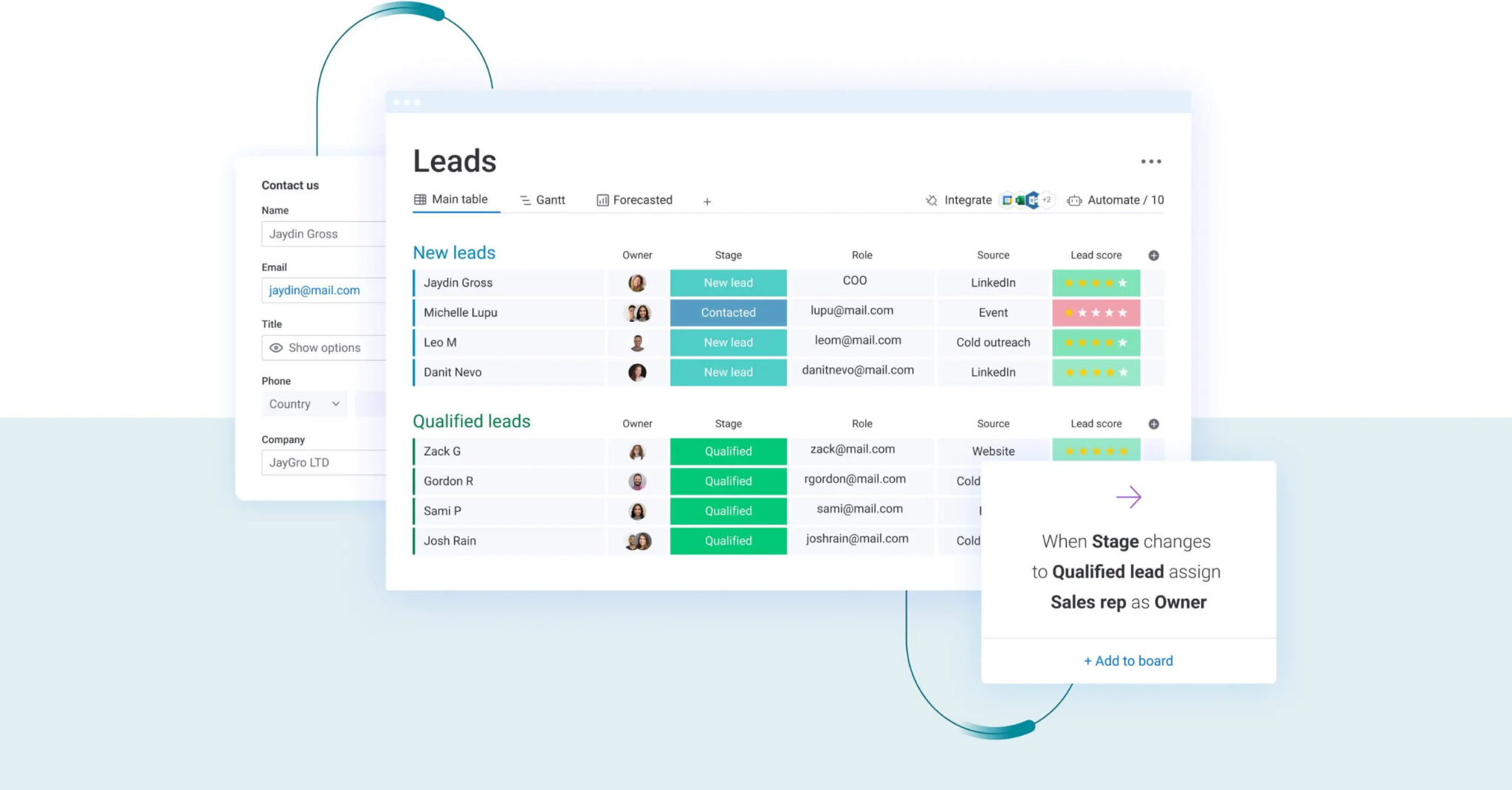
This is drafting outreach, updating CRM fields, routing a lead to the right rep, or triggering a Slack alert when a target account hits a threshold score. The best-built activation layers include a human checkpoint for anything customer-facing: an AI-drafted email that a rep reviews and sends, rather than one that fires automatically.
Fully autonomous activation sounds impressive in a demo, but it's also how a bad enrichment result turns into an embarrassing email landing in a prospect's inbox with the wrong name in the subject line.
The order matters more than the individual pieces. Skipping the foundation layer to jump straight to a slick activation layer is the single most common failure mode in this discipline. Sophisticated, AI-personalized outreach built on top of duplicate records and stale titles doesn't fail gracefully. It fails loudly, in a prospect's inbox, with your company's name attached.
The GTM Engineering Stack
A typical GTM engineering stack has three functional pieces working together: a CRM of record (Salesforce or HubSpot) that holds the system of truth, a data warehouse (Snowflake, BigQuery) that stores product usage and behavioral data at a scale most CRMs weren't built to handle, and an orchestration engine that connects the two and actually runs the workflows.
Clay has become the default orchestration engine in a lot of these stacks, and it's worth understanding specifically why, not just that it's popular. Clay's core mechanic is waterfall enrichment: instead of querying one data provider and accepting whatever it returns (or doesn't), a Clay table can query provider A, and only if that fails, fall through to provider B, then C, checking up to 100+ sources in sequence.
On a messy 10,000-row list, this typically lifts match rates from the 40 to 60% range you'd get from a single provider to 80%+, because different providers have different strengths (one is better at mobile numbers, another at verified work emails, another at niche industries). That's the enrichment half.
The modeling half runs through Clay's "Claygent" AI agent columns, which can read a company's website, summarize recent news, or score fit against a written ICP definition, turning what used to be a manual research step into a column formula that runs on every row automatically. The activation half closes the loop: drafted outreach, CRM field updates, and webhook triggers that hand off to a sequencing tool, all inside the same table.

The build pattern that works, across virtually every GTM engineering team using this kind of stack, is the same regardless of which specific tool sits at the center: prototype on 50 to 100 records, check the actual output row by row, then scale to the full list once the match rate and quality hold up.
Skipping the prototype step and running a new workflow against 20,000 records on day one is how teams burn through a month of enrichment credits discovering a formatting bug that was obvious in row 12.
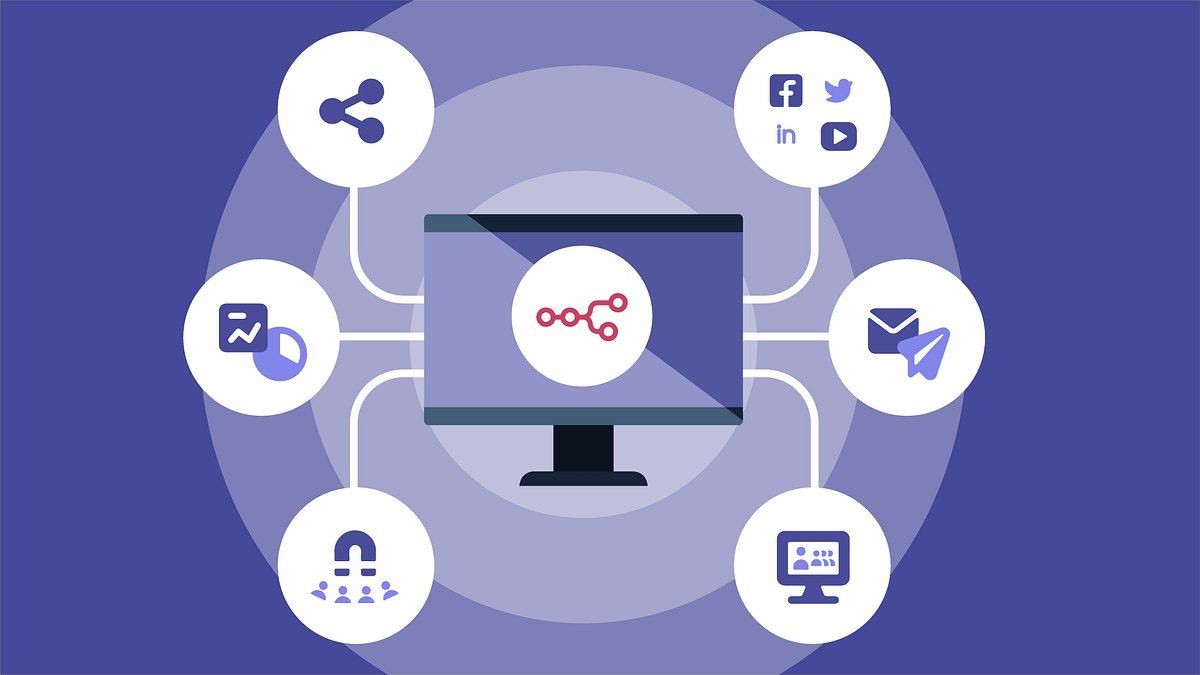
One caveat worth being direct about: describing Clay's role here is a factual account of one prominent tool in this category, not an endorsement. Plenty of GTM engineering teams run functionally similar stacks using Apollo for data, n8n for orchestration, and a CRM-native automation layer instead, and get comparable results.
The architecture pattern (enrich, model, activate) is the part that generalizes. The specific vendor is a build decision, not a religious one.
Best Growth Engineering Software for GTM
Most GTM engineering stacks combine a data enrichment or orchestration engine with a CRM and an automation layer. Pricing below was checked directly against each vendor's own pricing page.
A few things worth knowing before you shortlist anything here. Clay and Apollo bill in fundamentally different units, Clay by data credits and platform actions, Apollo by per-seat licenses plus a credit pool, so a direct dollar comparison is misleading unless you model your actual usage volume.
n8n's execution-based billing (one charge per full workflow run, regardless of steps) tends to come out significantly cheaper than Zapier's task-based billing (one charge per action step) once a workflow gets past 3 to 4 steps, which matters a lot for the multi-step enrichment-to-activation chains GTM engineering typically involves.
Warmly's pricing sits in an entirely different bracket than the rest of this table because it's sold as an annual intent-data contract, not a self-serve SaaS subscription, so it's usually evaluated against a signal-data budget line rather than a tooling budget line. All of these vendors update pricing multiple times a year. Re-verify against the live pricing page before you sign anything.
What to Look for in GTM Engineering Software
Multi-source data enrichment, not single-provider lookups. No single data provider has full coverage. A tool that waterfalls across several sources when the first one fails will consistently outperform a single-source lookup on match rate, especially on harder-to-find data like direct-dial numbers or non-corporate emails. When you're evaluating a tool, ask specifically how many providers it can chain per field, not just how many it "integrates with."
Native scoring and research logic, not just storage. A tool that only stores enriched data and hands it off to another system for scoring adds a hop, and every hop is a place data goes stale or gets dropped. Look for the ability to write formulas, run AI-driven research columns, or build scoring logic directly on the enriched table, so the modeling layer lives next to the data it's scoring.
Direct activation, not a fourth tool in the chain. Enrichment and scoring that dead-end in a spreadsheet don't move pipeline. The tool should be able to draft outreach, update CRM fields, or trigger a routing rule itself. Every extra tool you need to bolt on to close the loop from "we know this account is a good fit" to "someone reached out" is another integration that can break silently.
Two-way CRM sync with field-level control. One-way sync (data flows into your CRM but changes made there don't flow back) creates a split-brain problem fast: your enrichment tool thinks a field says one thing, your CRM says another, and nobody notices until a rep sends an email to the wrong contact. Insist on bidirectional sync, and check whether you can control which fields sync in which direction, since not every field should be overwritten automatically.
Execution transparency and error handling. When a workflow processes 5,000 rows overnight, you need to know which ones failed and why, not just a final count. Tools that surface row-level error logs (this email failed verification, this API call timed out) save hours of manual debugging compared to ones that just show a success percentage.
A realistic credit or cost ceiling for your actual volume. Run your expected monthly volume, list size times, enrichment steps times expected re-runs, against each tool's credit or task pricing before you commit. The gap between a tool's advertised starting price and what a team with real production volume actually pays is usually the biggest surprise in a first-year budget.
How to Start Doing GTM Engineering
Start with one clear bottleneck, not a platform rollout. The teams that stall out are almost always the ones that tried to engineer their entire go-to-market motion in the first sprint, instead of proving the approach on a single, painful, well-defined problem first.
Week 1: Pick the bottleneck and define success in a number.
Don't start with "improve outbound." Start with something you can measure: "our SDRs spend 45 minutes per account on manual research before a call" or "20% of our enriched leads have a bad email and we don't find out until the bounce." Write down the current baseline number before you touch any tooling. Without it, you won't be able to prove the system worked.
Week 2: Build the smallest version that fixes exactly that bottleneck.
If the bottleneck is manual research, that's a workflow that pulls a company's site, recent news, and tech stack into a single briefing doc, nothing else. Resist the urge to also add lead scoring and outbound drafting in the same build. A solid first build has four parts, and no more: clean or enriched input data, a scoring or research logic step, an activation step that produces something a human uses, and a trigger or schedule that runs it without anyone manually kicking it off.
Week 3: Validate on a small batch before trusting it with the full list.
Run the workflow against 50 to 100 real records, not synthetic test data, and check the output row by row. This step catches the formatting bugs, mismatched fields, and edge cases that only show up with real messy data, before they've cost you enrichment credits or, worse, gone out to real prospects.
Week 4 and beyond: Measure, then template.
Compare the new number against your Week 1 baseline. Did the 45-minute research task drop to 5 minutes? Did the bad-email rate fall below 5%? If the workflow works, document it as a repeatable template (which fields it touches, which providers it calls, what the trigger condition is) so you can apply the same pattern to the next bottleneck without rebuilding from scratch. This is also the point to decide whether the win justifies expanding the workflow, adding the scoring layer you held off on in Week 2, for instance, rather than starting a second bottleneck from zero.
The pattern that repeats across every successful build: small scope, a measurable before-and-after, validation before scale, and a template you can reuse.
Teams that skip straight to an ambitious, multi-department automation platform almost always end up with something too complex to debug and too fragile to trust, which is a worse outcome than the manual process they were trying to replace.
Best-Rated Growth Engineering Companies for GTM
Not every team wants to hire or build an internal GTM engineering function, and for a lot of companies, that's the right call.
Building this discipline in-house means hiring a technical practitioner who understands both data engineering and revenue motion, giving them time to prototype and fail on real bottlenecks, and accepting a ramp period before the system produces anything.
Agencies and specialized companies fill that gap, and they split into two categories that solve different halves of the problem.
Cleverly: Best for Getting GTM Engineering's Outbound Results Without Building the System
Best for: companies that understand the value of a signal-based, data-driven outbound motion, the exact outcome GTM engineering is built to produce, but don't want to hire, train, and manage an internal GTM engineer to build and maintain the workflow behind it.
The honest way to think about where Cleverly fits into everything covered in this guide. GTM engineering breaks down into three layers: foundation (clean, enriched data), modeling (scoring and research logic), and activation (the outreach and follow-up that actually gets triggered off the first two layers).
Most of the software in this guide, Clay, Apollo, n8n, helps a team build all three layers themselves. Cleverly operates differently: it's a B2B lead generation agency that runs the activation layer as a managed service, using its own ICP-aligned targeting, enrichment-informed research, and signal-based triggers to power personalized LinkedIn outreach, cold email, and cold calling campaigns, without your team having to build, debug, or maintain the underlying workflow.
That distinction matters more than it might sound. A GTM engineer's real value shows up when the activation layer actually fires consistently, when a funding announcement or a job change triggers a relevant, well-timed message instead of sitting in a dashboard nobody checks. That consistent execution, day after day, account after account, is exactly what an outbound agency is built to do, because it's the entire job, not one responsibility split across ten others on an internal team's plate.
Cleverly's SDRs and account strategists run the same enrichment-to-outreach logic a GTM engineer would architect in Clay or Apollo, but as an ongoing operational function rather than a system someone internally has to keep patched and running.
This is also why Cleverly tends to be the right fit specifically for companies earlier in their GTM maturity, before they've hired a dedicated GTM engineer, or companies that have decided the execution layer isn't where they want to spend internal engineering time even after they've built out their data foundation elsewhere.
Across the B2B companies it works with, Cleverly has generated 224.7K leads, $51.2M in closed client revenue, and $312M in client pipeline, proof that the activation layer works whether it's built internally or run as a managed service on your behalf.
Other Growth Engineering / RevOps Agencies
Several Clay-certified and RevOps-focused agencies specialize in the technical build itself, the foundation and modeling layers, rather than ongoing outbound execution. demandDrive, an official Clay Studio Partner, focuses on operationalizing Clay across enrichment and prospecting workflows for B2B revenue teams, and upgraded to a Clay Enterprise relationship after building out its own internal use case.
RevPartners, a Clay Elite Studio Partner that also holds a HubSpot Solutions Partnership, specializes in wiring the CRM, attribution, and reporting layer behind a Clay-built system, which matters because most Clay-only shops can build the outbound tables but stop short of connecting them properly to the CRM reps actually live in.
These agencies typically hand off a working, documented system for your internal team to run day to day, rather than executing the outreach themselves, which makes them a better fit for teams that want to own the system long-term but need help with the initial technical build.
Don't Have a GTM Engineer? Here's How Cleverly Runs the Outbound Layer for You
GTM engineering's real value shows up in the activation layer, the outreach and follow-up that actually gets triggered off clean data and scoring. That layer is also the one most teams still execute manually, or don't execute consistently at all.
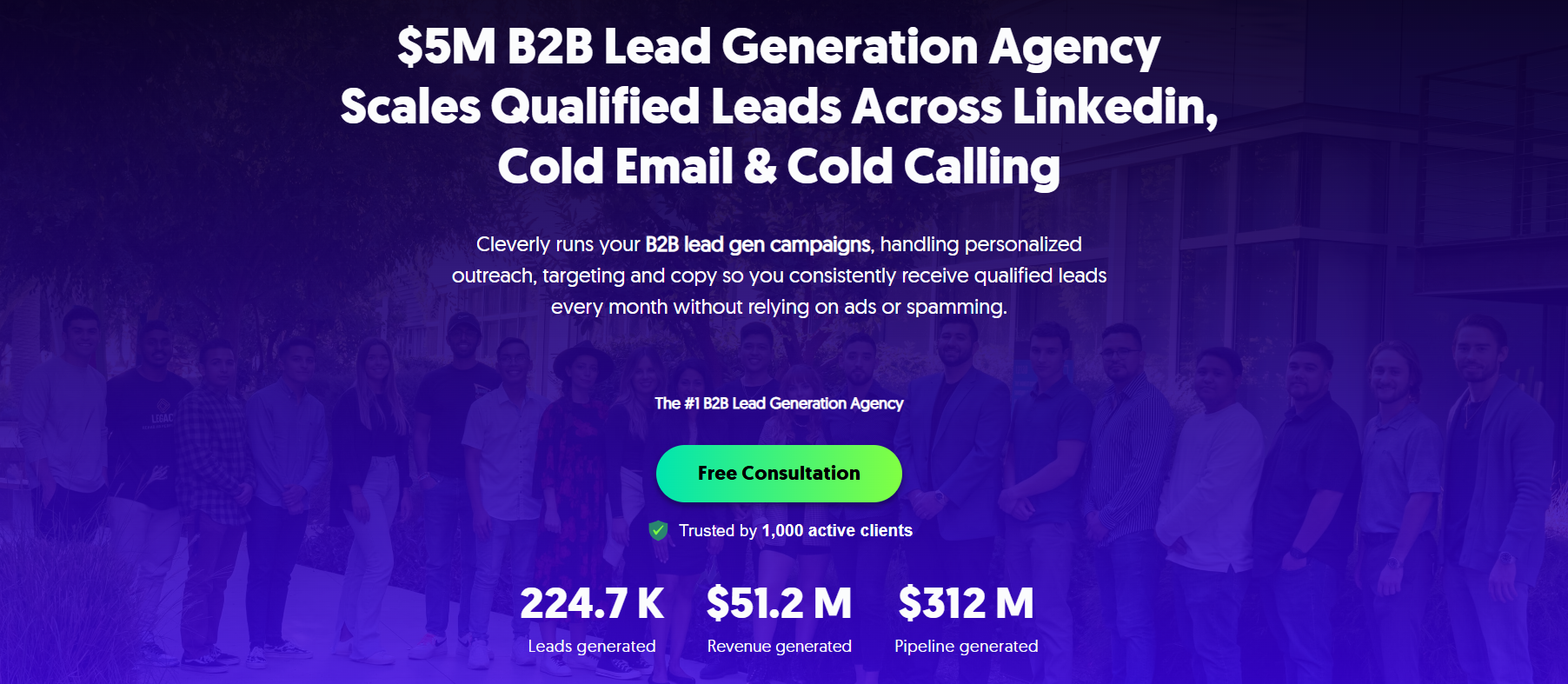
As a B2B lead generation agency, Cleverly runs the outbound execution that a GTM engineering system is built to trigger. That means personalized LinkedIn outreach, cold email, and cold calling campaigns targeted using enrichment and signal data, without requiring an internal hire to build and maintain the underlying workflow.
Not every team has the resourcing to hire a dedicated GTM engineer, or the time to build these systems in-house before results start showing up. Cleverly delivers the outcome, targeted and triggered outbound, as a managed service instead of a project someone has to own internally.
This approach has generated 224.7K leads, $51.2M in closed client revenue, and $312M in client pipeline across the B2B companies Cleverly works with. If you understand the value of signal-based, data-driven outbound but don't have, or don't want to build, an internal GTM engineering function, this is the more direct path to the same result.
Want the outbound results of GTM engineering without building the system yourself? Book a strategy call with Cleverly and see what a done-for-you outbound engine looks like for your pipeline.
Conclusion
GTM engineering treats go-to-market as a system to be built, not a set of manual tasks to be staffed up. The role spans outbound systems, CRM hygiene, signal-based workflows, and account intelligence, and it's measured in meetings booked and hours saved rather than tasks checked off a list.
Whether you build this function internally, buy the software and build it yourself, or bring in an agency depends on your team's resourcing and how much of the execution layer needs to run in-house versus outside.
What doesn't change is the discipline underneath it. Clean data, a working scoring layer, and reliable activation move pipeline. The specific tool you use to get there matters far less than getting that sequence right.
Frequently Asked Questions
Free Resource
How to Scale a Profitable Cold Call System
Get the complete guide — download it instantly now.

Free Ebook
Download the Free Guide
Enter your details to get instant access.
You're all set! 🎉
Your ebook is downloading now.
Click below if the download didn't start automatically.