Modified On :
August 27, 2026
Key Takeaways
- A prospect list is only as strong as the ICP behind it. Volume without fit just moves the failure point from your inbox to your CRM.
- Verification isn't a final check box. It's the gate that decides whether the rest of your campaign has a chance to work.
- The best lists come from combining firmographic, technographic, and behavioral signals, not picking one and calling it done.
- Segmentation is what turns a spreadsheet into a targeting strategy. Without it, personalization at scale is impossible.
- List building isn't a one-time project. Markets shift, people change jobs, and a list that converted last quarter can quietly go stale.
Here's a number that surprises most people building their first outbound list: 2,000 verified, ICP-matched contacts will consistently outperform 10,000 unverified ones. Not by a little. By enough to change how a whole quarter looks.
That gap is where most disappointing cold outreach results actually come from. Teams blame the subject line, the opener, the offer.
But B2B contact data decays at roughly 22% to 25% a year, and unverified sends now bounce at rates north of 7% on average, well past the 2% ceiling that keeps a domain healthy. The problem usually isn't the copy. It's the list the copy got sent to.
This guide walks through the 7-step process for prospect list building that actually converts, from defining your ideal customer profile to segmenting contacts for personalized outreach.
If you're an SDR, founder, or demand gen lead rebuilding your outbound targeting from scratch, or just trying to figure out why reply rates keep sliding, this is the process that fixes it at the root.
Why Most Prospect Lists Underperform
A list built to hit a number, "get us 5,000 contacts by Friday," optimizes for the wrong thing. It solves for size. It should be solving for fit.
Volume-first list building backfires in three predictable ways:
- High bounce rates that tank domain reputation before a single reply comes in.
- Low relevance, since a bigger net catches more people who were never going to buy.
- Wasted SDR time chasing conversations that were dead on arrival.
Stale or unverified contact data makes this worse before outreach even starts. If a fifth of your list bounces, inbox providers notice. Once Gmail or Outlook flags your domain, every email you send, even to good contacts, lands with worse deliverability.
The other quiet killer is skipping ICP definition. A list built around "anyone who might be interested" isn't targeting, it's guessing with extra steps. Reps end up personalizing messages for people who were never going to be a fit in the first place, which burns time without moving pipeline.
How to build a prospect list that actually converts means fixing this upstream. The list-building stage is where the campaign gets won or lost, long before anyone opens a doc to write copy.
🎯 A Better Prospect List Starts With Better Targeting.
Our LinkedIn, cold email, and cold calling campaigns generate 15–30 qualified meetings every month with high-fit prospects.
How to Build a B2B Prospect List That Converts (Step by Step)
This is a 7-step process. Skip a step and you'll usually see it show up later as a bounce rate problem, a reply rate problem, or a "why isn't anyone engaging" problem. Here's how to build a qualified prospect list the right way, start to finish.
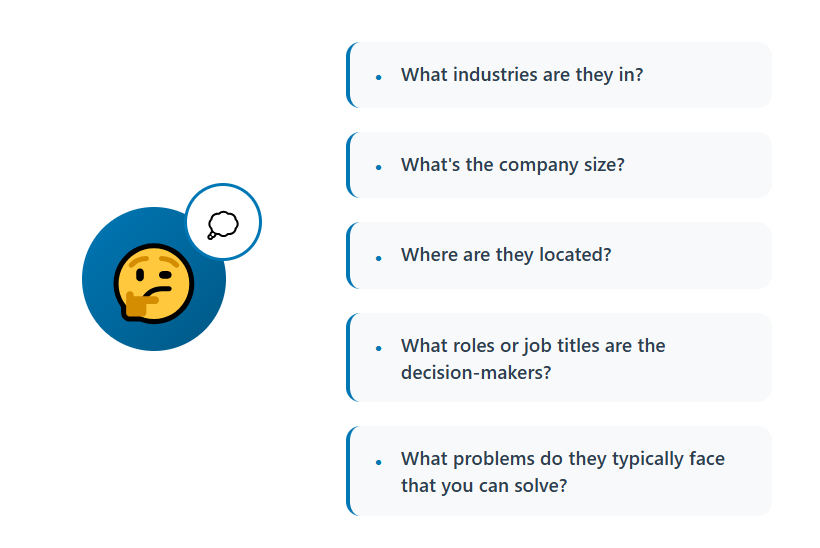
Step 1: Define Your Ideal Customer Profile (ICP)
Everything downstream depends on this step being specific, not directional. Start with firmographic criteria:
- Industry and sub-industry
- Headcount range
- Revenue band
- Geography
Then layer in technographic signals. What's in the target account's tech stack that tells you they're a fit? A company running legacy infrastructure looks like a very different prospect than one that just adopted a competing tool.
Finally, add behavioral triggers. Recent funding rounds, new leadership hires, hiring spikes in a specific department. These signals tell you an account is entering a buying window right now, not just that it technically matches your criteria on paper.
Step 2: Identify Target Accounts
With the ICP defined, go find the companies that match it.
LinkedIn Sales Navigator, industry-specific lists, and intent-signal tools are the starting point here. But one source rarely gives you the full picture. Combining a company database like Apollo or Crunchbase with a decision-maker research tool fills in gaps that a single tool misses.
The discipline that matters most in this step: cross-check every account against your Step 1 criteria before it makes the list. A broad, loosely filtered pull feels productive, but it just pushes the qualification problem downstream to your SDRs.
Step 3: Find the Right Decision-Maker Contacts
An account match doesn't mean you've found the right person at that account.
- Target contacts who actually have influence or authority over the decision your offer touches, not just anyone with a relevant-sounding title.
- Match title and seniority to what your offer requires for approval. A tool needing budget sign-off needs a different contact than one a manager can greenlight solo.
- Where it makes sense, pull more than one contact per account. A champion plus a decision-maker gives you two paths instead of betting everything on one inbox.
Step 4: Verify Every Email Address
This is the step teams skip under deadline pressure, and it's the one that costs the most later.
Run every contact through multi-provider email verification before it touches an active sending list. The target: stay under a 2% bounce rate on any list you're actively sending to. Leading data providers maintain 91% to 95% accuracy on verified contacts.
If your list is coming in meaningfully below that, you have a data quality problem to solve before you have a messaging problem to solve.
Step 5: Enrich Contacts with Additional Data
A verified email and a name is a starting point, not a finished contact record.
Enrichment adds the firmographic and technographic detail an SDR needs to write something that doesn't read like a template. Company size, recent news, tech stack, department structure. This is what separates "Hi {{FirstName}}, hope you're well" from a message that references something specific and true about the account.
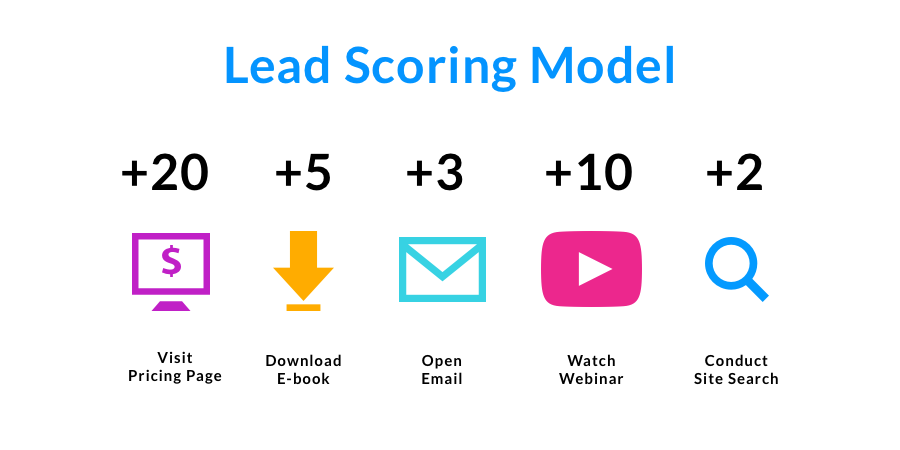
Step 6: Score and Prioritize by ICP Fit
Not every verified, enriched contact deserves the same outreach priority.
Score contacts by how closely they match your ICP, and weight toward accounts showing multiple fit signals at once. A contact matching on firmographics, technographics, and a recent behavioral trigger is a stronger bet than one matching on firmographics alone.
Prioritizing this way means your best reps and your first-touch messages go to the accounts most likely to convert.
Step 7: Segment for Personalized Outreach
The final step is grouping contacts by what they actually share, industry, role, or a specific trigger event, instead of treating the full list as one audience.
Segmentation is the difference between personalization that scales and one generic template sent to everyone. A VP of Sales at a 50-person startup and a VP of Sales at a 2,000-person enterprise are not the same prospect, even if their title matches. Segmenting lets your messaging reflect that.
Common Mistakes When Building a Prospect List
Even teams that know the steps above still trip on execution. The most common ways to build a prospect list quickly and regret it later:
- Prioritizing size over fit. A bigger list feels like progress. A better-matched list is what actually converts.
- Skipping verification to save time. The time saved upfront gets paid back with interest in bounce-driven deliverability damage.
- Treating list building as one-and-done. ICPs shift, markets shift, and contacts change jobs. A list that was converted six months ago has already started decaying.
- No segmentation. Without it, every message has to be generic enough to apply to everyone on the list, which means it resonates with almost no one.
🚀 Better Data. Better Prospects. More Pipeline.
With 53,000+ meetings booked and $312M+ in pipeline generated, Cleverly helps 10,000+ businesses turn smarter prospecting into predictable growth.
How Cleverly Builds Prospect Lists That Convert
Getting all seven of these steps right, consistently, campaign after campaign, is a real operational lift. Most internal teams have the knowledge to do it but not the bandwidth to sustain it while also running the rest of outbound.
As a B2B outbound lead generation agency, we build ICP-aligned, verified, and segmented prospect lists as a standard part of every LinkedIn, cold email, and cold calling campaign we run.
This isn't a separate add-on. It's the foundation every campaign gets built on, because strong copy sent to the wrong list still underperforms no matter how good the messaging is.
Our process includes ICP definition support, verified list building, contact enrichment, and ongoing refinement based on how each campaign actually performs.
We've used this approach across 10,000+ client campaigns, which has generated over $312 million in client pipeline to date. That scale comes from getting the list right before a single message goes out, not from sending more messages to more people.
If you'd rather have a prospect list built to convert than spend internal hours managing verification and segmentation by hand, book a free consultation with Cleverly and we'll walk through what that looks like for your ICP.
Conclusion
A prospect list that converts comes from three things working together: a clearly defined ICP, verified data, and proper segmentation. None of that comes from maximizing how many rows are in the spreadsheet.
Skip any one of the seven steps, especially verification or segmentation, and it won't stay hidden for long. It shows up in bounce rates, then in reply rates, then in a pipeline number that doesn't match the effort going into it.
Treat list building as the foundation of the campaign, not the task you rush through to get to the "real work" of writing outreach copy. Get the foundation right, and everything built on top of it has a real shot at working.
Frequently Asked Questions
Free Resource
How to Scale a Profitable Cold Call System
Get the complete guide — download it instantly now.
Free Ebook
Download the Free Guide
Enter your details to get instant access.
You're all set! 🎉
Your ebook is downloading now.
Click below if the download didn't start automatically.