Modified On :
August 31, 2026
Key Takeaways
- A sales engagement platform gives you the pipes to send outreach, but it doesn't write the strategy or manage the risk when something breaks.
- Multichannel add-ons on per-seat platforms compound fast, so the sticker price rarely matches what a team actually pays once LinkedIn, calls, and AI features enter the mix.
- Deliverability, list quality, and copywriting decide whether a campaign works, and a platform alone can't fix any of the three.
- The right alternative depends on what you're solving for: more data, cheaper sending volume, agency-scale infrastructure, or getting outbound off your plate entirely.
- Managed outbound shifts the operational burden (deliverability, contracts, troubleshooting) from your team to the agency, which is the core trade a self-serve tool can't offer.
Reply.io shows up on nearly every "best sales engagement platform" list, and for good reason. It's been around for years, it handles multichannel sequencing well, and it's earned a 4.6/5 rating on G2 from over 1,500 reviews. But a strong rating doesn't mean it's the right fit for every team, and plenty of Reply.io users eventually go looking for something else.
Part of that comes down to timing. Even though 73% of B2B decision-makers prefer to be contacted by email, the average reply rate across cold outreach sits at just 4.1%. When margins are that thin, the tool you build your outreach on matters more than ever, and so does what it actually costs once you add the pieces most teams end up needing.
This guide breaks down what Reply.io does well, where it falls short, and what real pricing looks like with add-ons included.
Then we'll walk through the best Reply.io alternatives for cold email, including why a managed agency can outperform a self-serve platform for teams that want results without operating another piece of software.
What Is Reply.io?
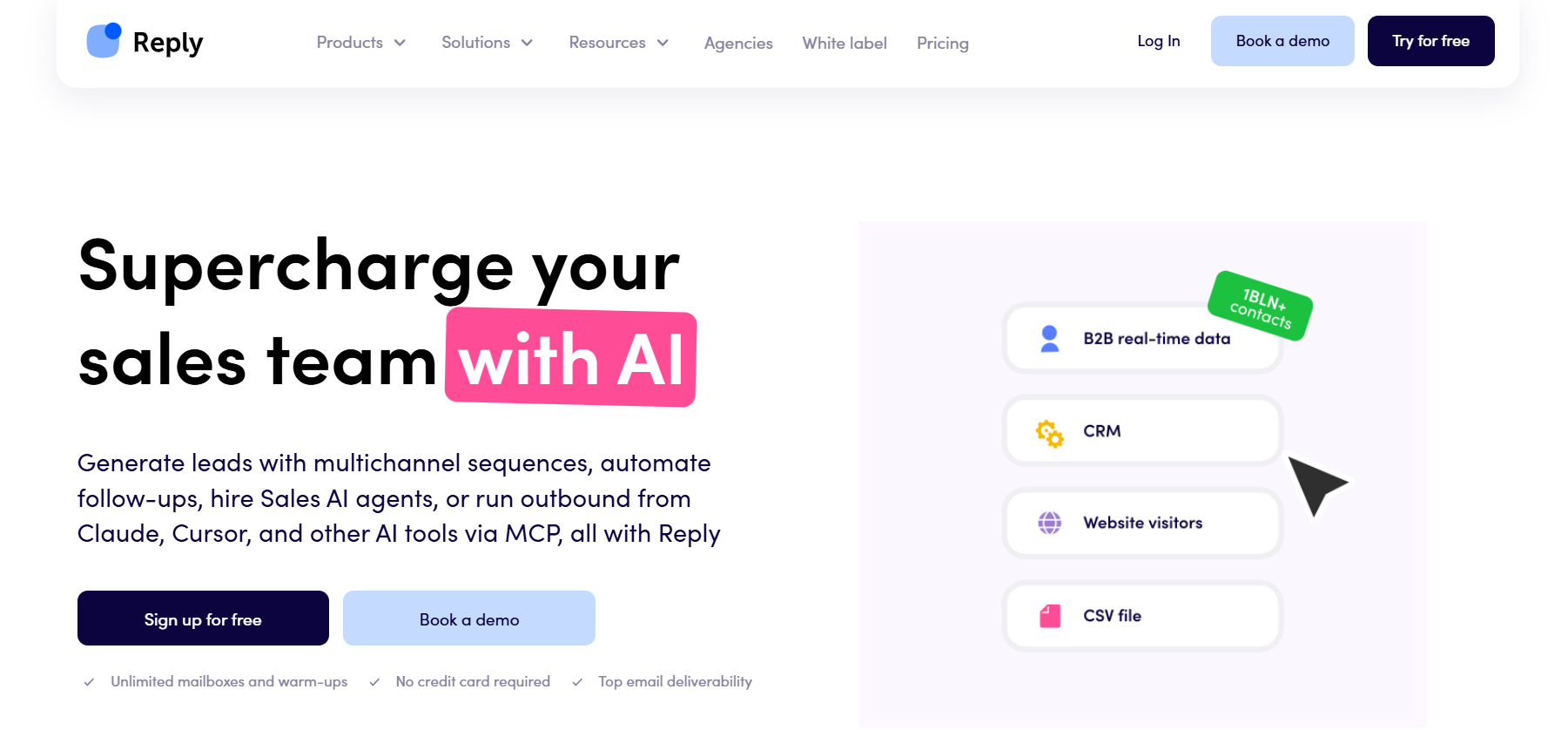
Reply.io is a sales engagement platform built for teams running multichannel outbound. It combines lead search, sequencing across email, LinkedIn, WhatsApp, SMS, and calls, personalization tools, and reporting, all inside one dashboard.
The platform also ships an AI SDR feature called Jason AI. Jason searches Reply.io's database of over 1 billion contacts, drafts and sends outreach, handles incoming replies, and can book meetings without a human touching the sequence. It runs in either fully autonomous mode or a human-approved copilot mode.
At its core, Reply.io is positioned as a workflow tool for teams that want to run coordinated sequences across several channels at once, not just fire off cold emails. That positioning is also where most of its pricing complexity comes from, which we'll get into next.
📧 Good Software Sends Emails. Great Outreach Books Meetings.
Our done-for-you cold email campaigns combine targeting, personalization, and deliverability to generate 15–30 qualified meetings every month.
Reply.io Pricing and Features
Reply.io runs three separate pricing tracks: a per-seat sales engagement plan (Email Volume and Multichannel), a credit-based AI SDR plan (Jason), and a dedicated Agency plan. Each one prices differently, so it's worth breaking them apart.
Email Volume plan
This is the email-only tier, priced by active contacts rather than a flat seat fee.
What's actually included: unlimited mailboxes (subject to a fair use policy tied to your contact volume), email warmup, unlimited emails to active contacts, 50 live data credits a month, up to 200 website visitor reveals a month, and the anti-spam and deliverability suite.
What's not included: LinkedIn and calling. Both sit outside this plan entirely as paid add-ons, at $69/month per LinkedIn account and $29/month per calling/SMS account. That's on top of whatever seat price you land on above.
Multichannel plan
This is Reply.io's "best value for teams" tier, and the one most multichannel sequences actually run on.
- Annual billing: starts at $89/user/month
- Monthly billing: starts at $99/user/month
Unlike Email Volume, Multichannel bundles in 1 LinkedIn account and 1 calling/SMS account per user at no extra cost, along with 10 mailboxes, unlimited active contacts, unlimited emails, WhatsApp semi-automation, 50 live data credits a month, 200 website visitor reveals a month, CSM onboarding, and team and channel performance reporting.
If you need more than 1 LinkedIn or calling seat per user, additional accounts are billed at the same $69 and $29 add-on rates.
Jason AI SDR
Reply.io's autonomous AI SDR is priced separately, by active contact volume, not by seat.
Every Jason tier includes unlimited users, AI personalization, intent signals, autopilot or copilot mode, multichannel automation, unlimited mailboxes and warmups, and done-for-you deliverability. Growth and Enterprise add white-glove onboarding, a dedicated Slack channel, and custom playbooks.
Agency plans
- Agency Core: starts at $210/month. Covers unlimited clients and users, unlimited mailboxes and warmup, a consolidated email and LinkedIn inbox, an agency dashboard, role-based access, and an optional white-label upgrade. LinkedIn is not bundled here either; it's the same $69/month-per-account add-on.
- Agency AI SDR: starts at $500/month per client. This tier does bundle LinkedIn and email automation in, plus AI hyper-personalization, autonomous or approval-mode sending, and access to Reply.io's Customer Success team.
Add-ons that apply across every plan:
- LinkedIn automation: $69/month per account
- Calls & SMS dialer: $29/month per account
- AI and live data credits: tiered packages from 200 to 10,000 credits/month.
- Email validation: tiered packages from 5,000 to 300,000 validations/month, starting around $20/month.
Where the real cost shows up: a single rep on Email Volume who wants LinkedIn and calling is paying the base seat price plus $98/month in add-ons before any AI features enter the picture. A team of three on Multichannel gets 1 LinkedIn and 1 calling seat each included, which is a meaningfully better deal than Email Volume for any team planning to run more than one channel.
Reply.io Pros and Cons
No Reply.io review is complete without looking at what real users report after they've actually paid for it. Here's the balanced breakdown.
Reply.io Pros
- Easy to set up. Even newer users find the interface intuitive for building campaigns and organizing prospects.
- Genuinely strong multichannel sequencing. Email, LinkedIn, calls, and SMS combine into one cadence, and the conditional logic (if this happens, do that) is more sophisticated than most competitors offer.
- Enterprise-ready compliance. Reply.io is SOC 2 certified with a published DPA, SLA, and AI policy, which satisfies most procurement checklists out of the box.
Reply.io Cons
- Add-ons stack up fast. LinkedIn and calling features are priced separately from the base plan, so the real monthly cost climbs well past the advertised starting price.
- Contract terms catch people off guard. Users report a mandatory three-month minimum contract that isn't clearly disclosed, along with unexpected auto-renewal charges and a no-refunds policy on paid monthly billing.
- LinkedIn integration bugs. Some users report that buggy automation has led to LinkedIn account restrictions, which is a real risk if LinkedIn is a core channel for your team.
- Recurring reliability complaints. Slow load times, a steep learning curve, and CRM field-mapping inconsistencies show up repeatedly across G2 and Trustpilot reviews.
🚀 More Than Email. Build a Real Pipeline.
With 53,000+ meetings booked and $312M+ in pipeline generated, Cleverly helps 10,000+ businesses turn cold outreach into predictable growth.
Is Reply.io Right for You?
Reply.io makes sense for teams that want one platform to run multichannel sequencing and can live with enterprise-grade compliance requirements driving the decision. If your buying committee needs a signed DPA and SLA before anyone touches a tool, Reply.io checks that box better than most competitors.
It's a weaker fit if:
- Your team is wary of long contract commitments or has been burned by unclear auto-renewal terms before.
- You've had LinkedIn automation issues with other platforms and don't want to risk it again.
- What you actually want is outreach strategy and execution managed for you, not another dashboard to operate in-house.
That last point is the one worth sitting with. A platform gives you the infrastructure. It doesn't write your copy, build your list, or watch your deliverability while you're focused on other things.
That gap is exactly why so many teams start evaluating Reply.io alternatives in the first place.
Best Reply.io Alternatives for Cold Email
We reviewed each alternative on the same four criteria: best for, key features, limitations, and pricing. Cleverly is listed first because it solves the problem differently than the rest of this list. It's not a platform swap, it's a shift to managed execution.
1. Cleverly — Best Overall Alternative to Reply.io

Best For: Teams that want cold email results without operating a platform, managing contracts, or troubleshooting deliverability themselves.
Key Features:
- Full-service list building, copywriting, and campaign management as one service, not a self-serve tool with per-feature add-on pricing.
- No platform-side risk of buggy integrations or LinkedIn account restrictions caused by automation bugs.
- Strategy and human oversight built into every campaign instead of left entirely to the user.
Limitations: Not a self-serve platform, so it's the wrong fit if you specifically want to operate the tooling yourself.
Pricing: Custom, based on campaign scope. We run two models for cold email: Growth, a flat monthly retainer, and Scale, a pay-per-lead structure where you only pay for meeting-ready leads. Details are shared on a strategy call.
2. Apollo.io — Best for a Large Contact Database Plus Sequencing
Best For: Teams wanting a large built-in contact database combined with cold email sequencing.
Key Features:
- A database of 265M+ contacts bundled directly with sequencing tools.
- Added a standalone cold email offering in early 2026.
- A free tier available for smaller-scale use.
Limitations: Less mature multichannel sequencing than Reply.io's dedicated feature set, and data accuracy varies by region and industry.
Pricing: Free tier available; paid plans run from $49/user/month on Basic to $119/user/month on Organization (annual billing).
3. Instantly — Best for High-Volume, Low-Cost Sending
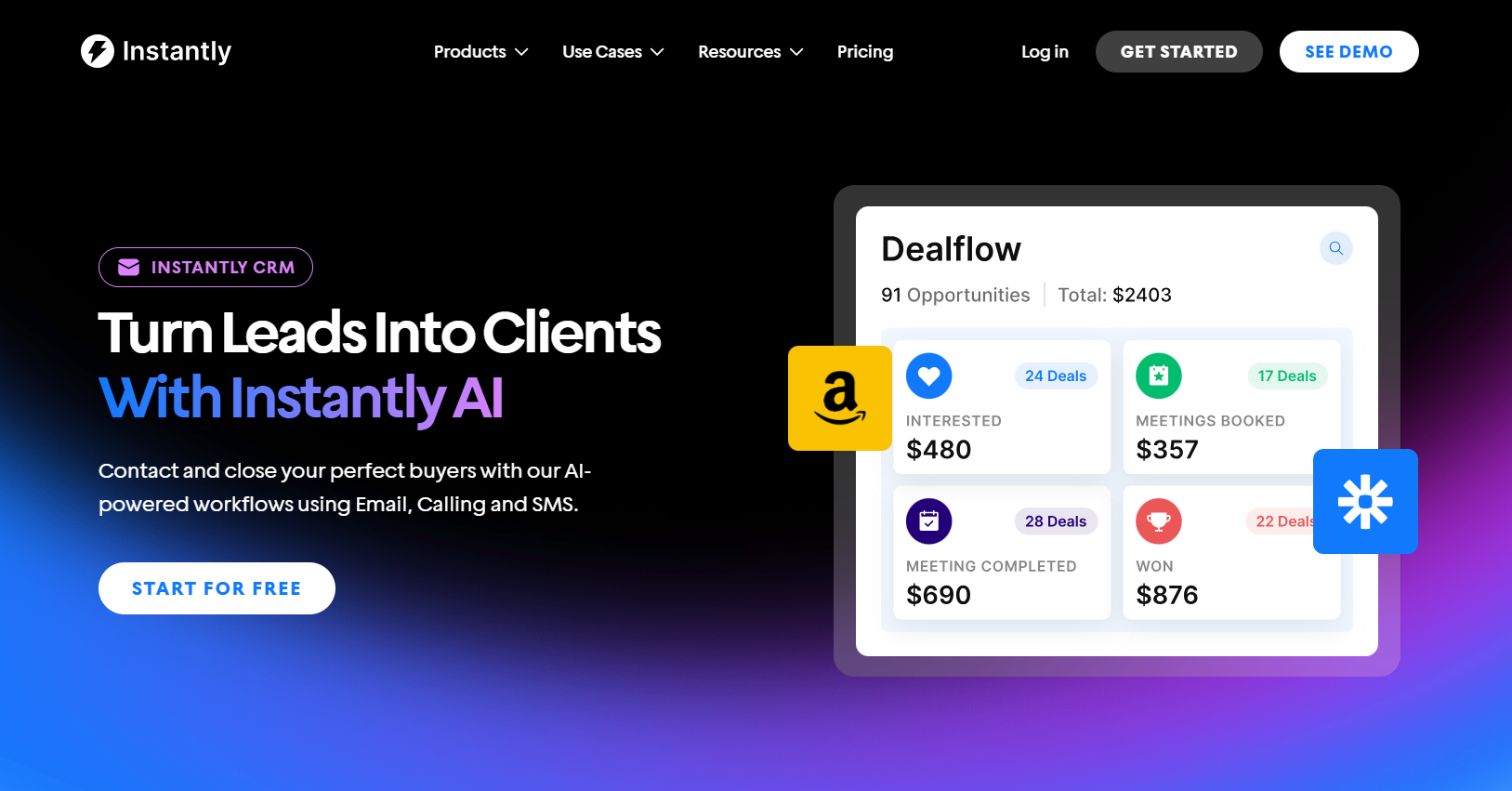
Best For: Teams prioritizing email volume and deliverability over multichannel sequencing.
Key Features:
- Unlimited mailbox connections with warm-up included at no extra cost on every plan.
- A straightforward, lower-cost model compared to Reply.io's per-feature add-ons.
- Strong deliverability monitoring and sender rotation tools.
Limitations: Much lighter multichannel capability (LinkedIn, SMS, calls) than Reply.io, so it's not built for teams wanting one all-in-one workflow.
Pricing: Plans run from roughly $37 to $47/month at entry.
4. Smartlead — Best for Agencies Running Multiple Inboxes
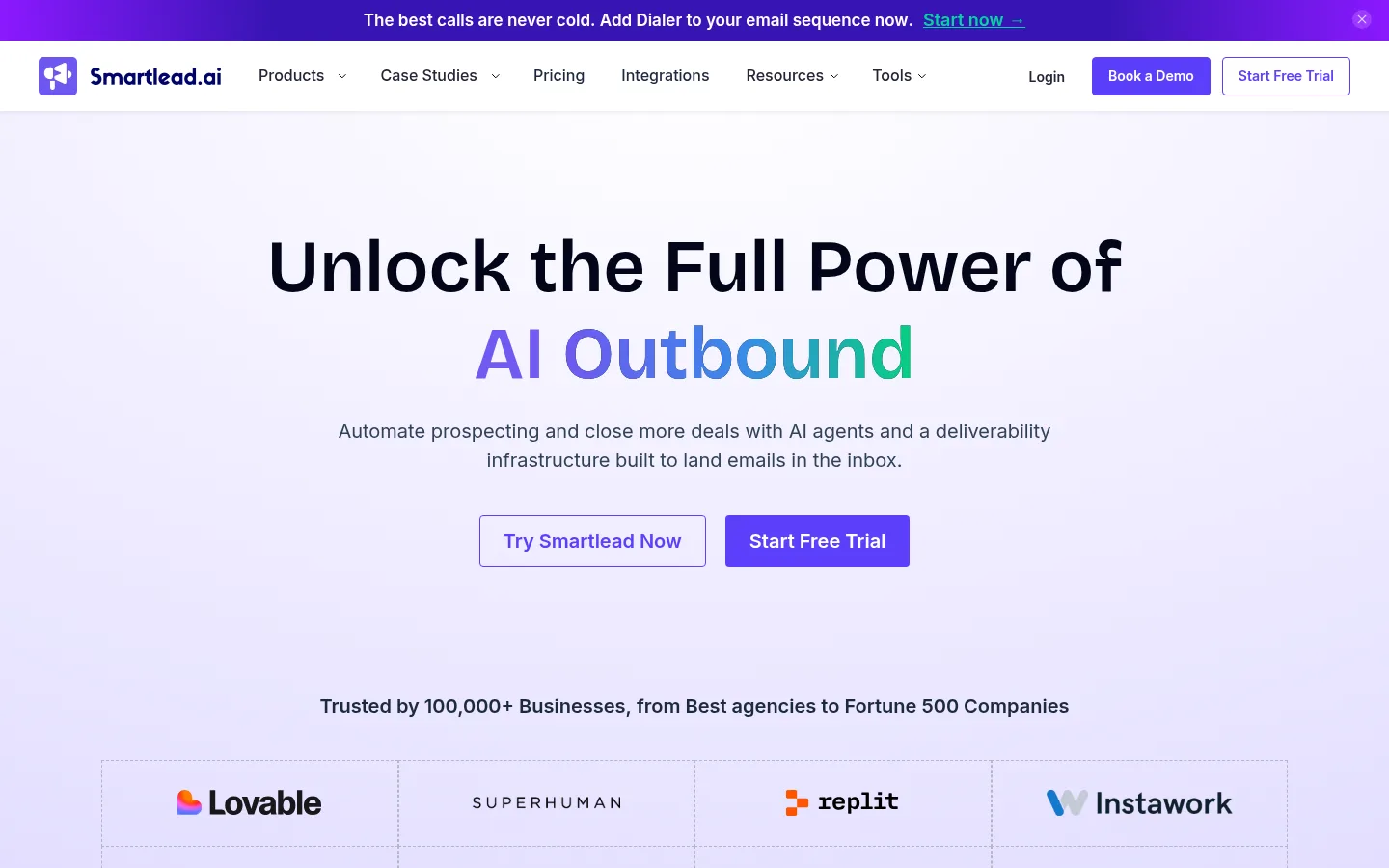
Best For: Agencies and teams managing outreach across a high volume of mailboxes for multiple clients.
Key Features:
- Unlimited mailboxes and unlimited warmup on every plan, with a Master Inbox that consolidates every reply.
- Built with a deliverability-first infrastructure designed for scale.
- Popular specifically among agencies, not just individual sales teams.
Limitations: Less native multichannel sequencing (LinkedIn, SMS) than Reply.io, and the interface leans more technical for newer users.
Pricing: Plans start around $39/month.
5. Lemlist — Best for Personalized, Multichannel Campaigns
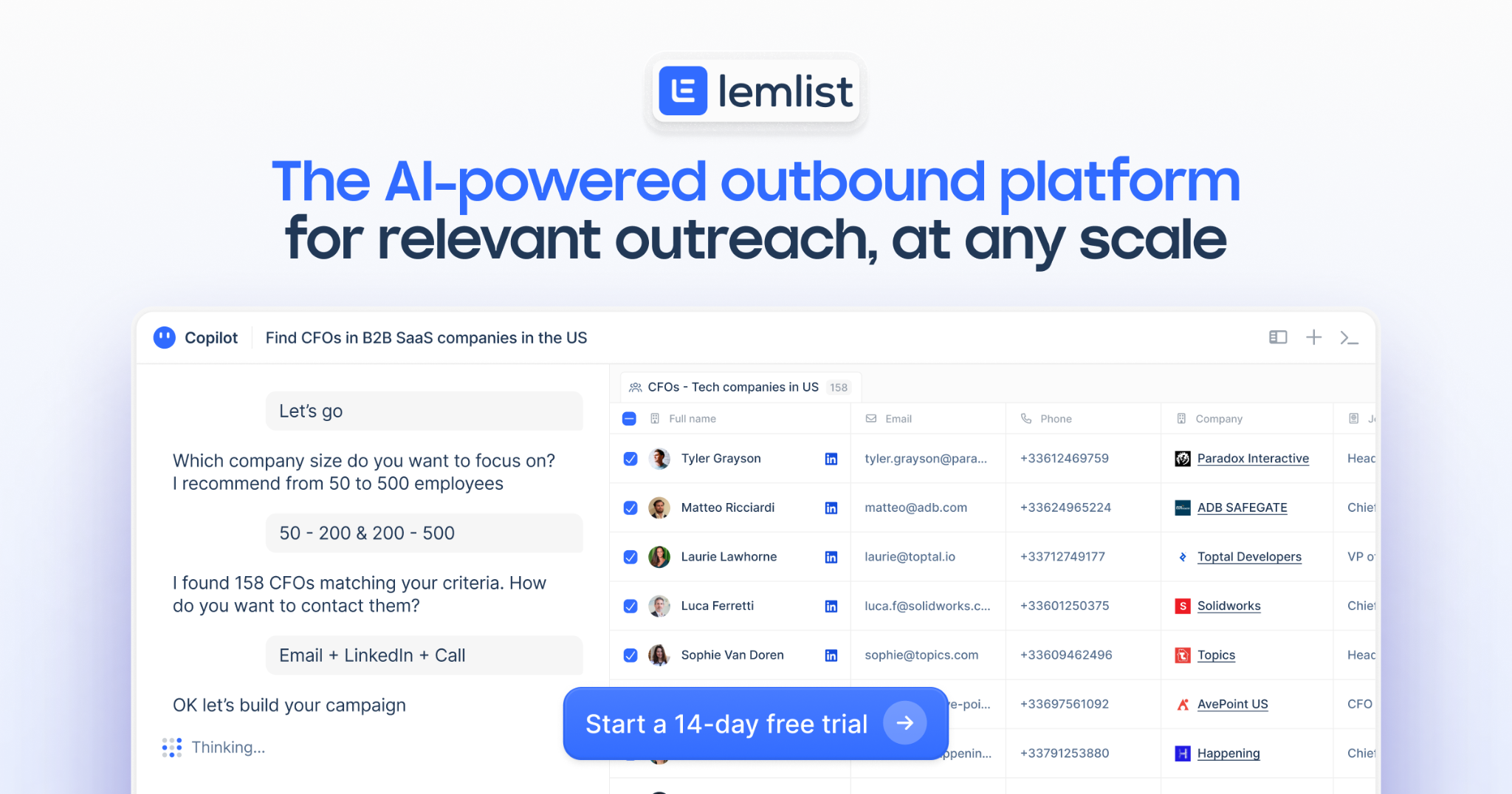
Best For: Teams wanting deep personalization (custom images, short videos) alongside multichannel sequencing.
Key Features:
- Personalized image and video embedding built directly into email sequences.
- LinkedIn and call touchpoints available on higher-tier plans.
- A proprietary warm-up tool (Lemwarm) built into the platform.
Limitations: Full multichannel capability requires the higher-tier Multichannel Expert plan, similar to Reply.io's add-on structure, and per-seat costs add up at scale.
Pricing: Plans generally range from around $59 to $99/user/month depending on tier.
Why Cleverly Is the Best Alternative to Reply.io
Reply.io and platforms like it give you the infrastructure to send multichannel outreach. What they don't do is write the strategy, manage the deliverability risk, or guarantee that your LinkedIn automation won't get an account flagged.
That's the fundamental difference between buying software and hiring a team.
A platform charges for features and leaves execution, troubleshooting, and contract risk to you. An agency gets judged on actual results and absorbs that operational risk instead of passing it along.
As a cold email agency, Cleverly handles ICP-aligned list building, personalized copywriting, deliverability setup and monitoring, and full campaign management as one service, without per-channel add-on pricing or long minimum contracts.
Cleverly has generated $312M in pipeline and $51.2M in closed revenue for clients across LinkedIn and cold email campaigns, working with companies ranging from early-stage startups to teams inside Amazon, Google, and Slack. That track record matters more than a feature list when the question is whether a campaign will actually book meetings.
Ready to stop managing outreach platforms and add-on pricing yourself? Book a strategy call with Cleverly!
Conclusion
Reply.io is a genuinely capable multichannel platform, and its 4.6/5 G2 rating reflects real strengths in sequencing and automation depth. But the add-on pricing model, reported contract terms, and LinkedIn integration issues are all real considerations before you commit a budget to it. Apollo, Instantly, Smartlead, and Lemlist each solve a specific gap, whether that's database size, sending volume, agency scale, or personalization, depending on what your team actually needs most.
For teams that want results without operating a platform or managing its risks themselves, an agency like Cleverly removes that operational burden entirely.
The right choice for your team ultimately comes down to one question: are you looking for a better self-serve Reply.io alternative, or are you ready to get out of managing one altogether?
Frequently Asked Questions
Free Resource
How to Scale a Profitable Cold Call System
Get the complete guide — download it instantly now.

Free Ebook
Download the Free Guide
Enter your details to get instant access.
You're all set! 🎉
Your ebook is downloading now.
Click below if the download didn't start automatically.