Table of Contents
Why Classic Closing Techniques Backfire in B2B
The Four Jobs a Closing Question Should Do
30 Sales Closing Questions by Situation
How to Ask These Questions Without Sounding Like an Interrogator
What the Answers Actually Tell You
Closing Question Mistakes That Stall Deals
Why Closing Questions Only Matter if the Pipeline Is Full
Conclusion
Frequently Asked Questions
Modified On :
October 16, 2026
Key Takeaways
- A closing question’s job is to find the truth faster, not to pull agreement out of a buyer.
- Surface risk early. An objection you hear in week two is cheap. The same objection after the proposal can kill the deal.
- Map the buying committee. A champion who likes you is not an economic buyer who has approved budget.
- Never end a call without an action, an owner, and a date.
- Move the deal stage based on what the buyer committed to, not on how the conversation felt.
Closing a B2B deal isn’t about finding the perfect line to get a buyer to say yes. It’s about understanding what’s holding them back, who else needs to sign off, and what needs to happen before they can move forward.
That’s especially true in complex sales, where deals can stall even when the prospect likes your solution. Budget approval, internal buy-in, competing priorities, or unanswered questions can all stand between a promising conversation and a signed contract.
Gartner research shows B2B buyers spend only about 17% of their buying time meeting with potential suppliers. The rest goes to independent research and internal debate. And the buying group on a complex purchase usually has 6 to 10 decision-makers, and 77% of buyers describe their last purchase as complex or difficult.
The right sales closing questions help you uncover those roadblocks before they cost you the deal. Instead of pushing for a decision, you help buyers work through their concerns, clarify what matters, and agree on a concrete next step.
In this guide, we’ve put together 30 sales closing questions for different situations, from handling last-minute objections to confirming buying decisions and moving stalled deals forward.
You’ll also learn when to ask each question and how to keep the conversation natural rather than turning it into an interrogation.
Why Classic Closing Techniques Backfire in B2B
Most of the famous closes were built for a single buyer making a fast decision. Closing questions for sales in B2B have to work in a different setting. There are more people, more process, and more ways for a deal to die quietly.
Here is where the old playbook breaks:
The urgency trick is worth a second look. Buyers who run procurement cycles for a living can spot a fake deadline in seconds. Once they spot one, they start doubting everything else you said.
The deeper problem is simple. These techniques try to extract a yes instead of finding out what is true. A yes you pulled out of someone in week three often turns into silence in week six.
What replaces them is a different kind of question. These questions expose risk early, so you spend your time on deals that can actually close.
Pro tip: Your job in a close is to find the truth faster, not to manufacture agreement. If you hold that one idea, most of the techniques in this guide follow naturally.
🎯 Great Closers Start With Better Conversations
Before you close the deal, you need to reach the right buyers. Cleverly fills your pipeline with qualified B2B meetings through targeted outbound.
The Four Jobs a Closing Question Should Do
Before the list, here is the framework. Each of the best sales closing questions does one of four jobs. If you know which job you need done, you can pick a question by situation instead of scrolling for something that sounds good.
Test Alignment
These questions confirm the problem, the impact, and whether your solution fits. You use them throughout the cycle, not only at the end. If you wait until the close to check alignment, you are checking too late.
Surface Risk and Objections
You invite the concern instead of waiting for it to show up after the proposal. This is the highest-value category. Unspoken objections are what kill deals silently. The buyer never says “this is too risky.” They just stop replying.
Map the Buying Process
Who else is involved? What has to happen? In what order? Most stalled deals are process failures, not interest failures. The buyer wanted to buy. Nobody knew that legal needed three weeks.
Secure a Specific Next Step
A real next step has an action, an owner, and a date. This is the test of a real deal. Vague next steps (“let’s circle back next month”) are the clearest signal a deal is not progressing.
30 Sales Closing Questions by Situation
Below are sales closing questions examples you can use on real calls. Each one comes with a line on when to use it and what the answer tells you. Treat them as starting shapes, not scripts. Change the words so they sound like you.
Testing Alignment and Fit (5 Questions)
These confirm the problem is real, owned, and worth solving now. They also check your understanding of success before you propose anything.
1. “What changed that made this a priority right now?”
- Use it: Early in the cycle, or when a deal feels lukewarm.
- It tells you: Whether there is a real trigger, like a missed target, a new leader, or a budget cycle. No trigger usually means no urgency.
2. “If nothing changes over the next six months, what does that cost you?”
- Use it: After the buyer describes the problem.
- It tells you: Whether the problem is expensive enough to fund. If they struggle to answer, the problem is not urgent yet.
3. “Who owns fixing this today, and how high is it on their list?”
- Use it: When your contact describes a problem that sounds like someone else’s.
- It tells you: Whether the problem has an owner with a stake in solving it.
4. “A year from now, what has to be true for you to say this worked?”
- Use it: Before you build a proposal.
- It tells you: The actual success criteria, in the buyer’s words. You will use these words in your proposal and your close.
5. “Let me play back what I heard: the problem is [X], it’s costing you [Y], and you want [Z] by [date]. What did I miss?”
- Use it: At the end of discovery, before you propose.
- It tells you: Whether you understood the situation. Corrections here save you from a proposal that misses the mark.
Surfacing Objections Early (5 Questions)
These invite hesitation directly. They also give the buyer permission to raise a concern without feeling awkward.
6. “What could stop this from happening?”
- Use it: Mid-cycle, and again before the proposal.
- It tells you: The real risks, in the buyer’s order of priority. If you only ask one question from this guide, make it this one.
7. “Is anything we’ve covered giving you pause?”
- Use it: After a demo or a pricing conversation.
- It tells you: Whether a concern is sitting just under the surface. A slow “well...” is a gift. Follow it.
8. “On a scale of one to ten, how confident are you that this solves the problem? What would make it a higher number?”
- Use it: When the buyer says everything sounds good but gives you nothing concrete.
- It tells you: Their real confidence level. A seven is not a yes, and the answer to the second half is your to-do list.
9. “Have you tried to solve this before? What happened?”
- Use it: Early, and again whenever the buyer sounds guarded.
- It tells you: Where the scar tissue is. A past failure shapes how the buyer sees risk, even if they never bring it up.
10. “I’d rather hear a no today than a maybe in three months. Where are you leaning?”
- Use it: When a deal has gone a bit soft or slow.
- It tells you: Whether the buyer feels safe being honest. Buyers often relax when you make a no easy to say.
Mapping the Buying Committee (5 Questions)
These identify who else has to agree, who can block, and who has signed off on a purchase like this before.
11. “Besides you, who else will have a say in this?”
- Use it: As early as the first or second call.
- It tells you: The size of the group you are actually selling to.
12. “Who would be most unhappy if we picked this and it didn’t work out?”
- Use it: When the buyer has listed stakeholders, but you suspect someone is missing.
- It tells you: Who your quiet blocker is. This is often IT, security, finance, or a leader whose team will own the rollout.
13. “Who approves budget for something like this, and have they approved similar spend before?”
- Use it: After the buyer agrees the problem is worth solving, not before.
- It tells you: Whether you are talking to someone who can fund the deal.
14. “Last time you bought something like this, who got involved, and how did it go?”
- Use it: When the buyer is vague about their process.
- It tells you: The real buying path, based on what actually happened last time instead of what the org chart says.
15. “Would it help if I joined a short call with [name or role] so I can answer their questions directly?”
- Use it: When your contact keeps saying “I’ll run it by the team.”
- It tells you: Whether your contact is willing to bring you to the decision-maker. Hesitation here usually means they cannot or will not.
Worth knowing: A champion who likes you is not the same as an economic buyer who has approved the budget. Your champion can sell for you inside the company, but they cannot sign. If you only have a champion, your deal is not as far along as it feels.
Confirming Process and Timeline (5 Questions)
These cover procurement, security, legal, and any internal approval sequence. They also reveal whether the stated timeline is realistic or aspirational.
16. “Walk me through what happens after you decide you want to move forward.”
- Use it: As soon as the buyer shows real interest.
- It tells you: The full sequence, including steps they may not have mentioned. Write it down in order.
17. “Does this need security or legal review? How long did that take last time?”
- Use it: Before you send a proposal.
- It tells you: Whether a two-week deal is really a two-month deal. It also lets you send security documents early.
18. “You mentioned wanting this live by the end of Q1. What’s driving that date?”
- Use it: Whenever a buyer gives you a deadline.
- It tells you: Whether the date is tied to a real event, like a board meeting, a product launch, or a contract expiring. A date with no event behind it is a wish.
19. “Is this budgeted already, or does it need to be carved out of something else?”
- Use it: After value is clear and before you negotiate.
- It tells you: Whether you are buying from a line item or fighting for one. The second takes longer.
20. “If everything goes right, when could we realistically sign? And what’s the most likely thing to push that back?”
- Use it: When you are building your forecast.
- It tells you: Both the best-case date and the first thing that could break it. Use the second answer to plan your next move.
Testing Commitment and Readiness (5 Questions)
These are trial closes. They check readiness without asking for a decision. They also help you tell genuine interest from polite engagement.
21. “Based on what you’ve seen so far, how well does this fit what you’re trying to do?”
- Use it: After a demo or a strong discovery call.
- It tells you: How the buyer thinks about fit, in their words. Listen for specifics. “It looks great” is polite. “The reporting would fix our Monday problem” is real.
22. “What would you need to see to feel comfortable moving forward?”
- Use it: When the buyer likes the product but has not moved.
- It tells you: The exact proof they need, like a reference call, a pilot, or a security answer. Now you can go get it.
23. “If we hit those numbers in the pilot, is there anything that would still keep you from rolling it out?”
- Use it: When a trial or pilot is on the table.
- It tells you: Whether the pilot is a real path to a deal or a way to delay a no. If they name a blocker, you just saved yourself a month.
24. “If you were presenting this to your CFO tomorrow, what would they push back on?”
- Use it: When your contact is bought in but needs approval above them.
- It tells you: The objections your champion expects, and whether they feel ready to defend the deal.
25. “Are you looking at other options, and where do we stand?”
- Use it: When the buyer’s engagement drops off.
- It tells you: Whether you have competition, or whether your real competitor is doing nothing. Both change how you play the deal.
Securing the Next Step (5 Questions)
These lock an action, an owner, and a date before the call ends. They also include the two-option next step, which gives a choice of action instead of a yes or no.
26. “What happens next on your side, and by when?”
- Use it: At the end of any call.
- It tells you: Whether the buyer will commit to a specific action. A vague answer is data.
27. “Let’s get 30 minutes with legal this week. Does Thursday at 2 or Friday at 10 work better?”
- Use it: When the next step is clear but the buyer is slow to schedule.
- It tells you: Whether the buyer will take a concrete step. This is the two-option next step. They pick the time, not whether to meet.
28. “Would it be more useful if I walked your finance lead through the numbers, or sent a one-pager you can forward?”
- Use it: When your contact needs to sell internally.
- It tells you: How your champion wants to handle the internal conversation. If they pick the walkthrough, they likely want a bigger role for you. If they pick the one-pager, they may want to control the story.
29. “Can we write down who owns what and by when, so nothing slips?”
- Use it: Once a deal has three or more steps left.
- It tells you: Whether the buyer will treat the deal as a shared project. A buyer who edits the list with you is engaged. A buyer who says “sure, whatever” is not.
30. “If I don’t hear from you by Thursday, should I follow up, or would you rather I give you space?”
- Use it: At the end of a call where the buyer has gone quiet before.
- It tells you: How to follow up without being annoying, and whether the buyer is willing to hold themselves to a date.
🚀 Give Your Sales Team More Deals to Close
Stop relying on referrals alone. Cleverly runs your LinkedIn, cold email, and cold calling campaigns to bring more qualified prospects to the table.
How to Ask These Questions Without Sounding Like an Interrogator
A great question asked badly still feels like a cross-examination. Here is how we keep these conversations natural.
- Pick a few per call. Three or four is plenty. Working down a list makes the call feel like a form.
- Follow the buyer. If they mention legal, ask about legal now. Do not save it for question 17.
- Frame risk as help, not challenge. Compare “Why would this fail?” with “I want to make sure we don’t hit any surprises. What could slow this down?” The second one sounds like a teammate.
- Use silence. After you ask, stop talking. The pause is where the real answer comes from. Most reps fill it in three seconds and lose the best part.
- Mirror their words. If the buyer says “our reporting is a mess,” say “reporting.” Do not translate it into your category language.
- Write it down and repeat it back. “So legal takes about two weeks, and Priya signs off on budget. Did I get that right?” This confirms accuracy and shows you listened.
- Stay willing to hear no. The alternative is a pipeline full of deals that never die and never close.
Pro tip: If a question feels awkward to ask, say so. “This might be a bit direct, but...” works well. Buyers usually appreciate the honesty.
What the Answers Actually Tell You
A list of questions is only useful if you know how to read the replies. This section is what makes the list more than something to copy and paste.
The simple rule is to update the deal stage based on what the buyer committed to, not on how the conversation felt. A warm call with no commitment is still an early-stage deal. A short, awkward call that ends with a named next step and a date is more valuable.
This also makes your forecast more honest. Your manager will thank you.
Closing Question Mistakes That Stall Deals
Even good questions fail when they are used poorly. These are the mistakes we see most often.
- Saving the hard questions for the end. By then, there is no time to resolve what they surface. Ask early, so you can still respond.
- Asking about budget before the problem is worth solving. The buyer does not yet know what the problem is worth, so any number is a guess.
- Accepting a vague next step to keep the call positive. A pleasant call with no next step is a polite goodbye.
- Only speaking to the champion. They can influence a deal but cannot always close one.
- Treating a verbal yes as a close. Until procurement and legal have been mentioned, you do not have one.
- Running through a list of questions in order. Buyers can tell when you are reading. Respond to what they say.
- Never asking what could stop the deal. This is the single most useful question on the list. If you skip it, you are guessing.
- Avoiding a direct no. A deal that should die but lingers costs more pipeline time than any lost deal.
Why Closing Questions Only Matter if the Pipeline Is Full
Better sales closing questions improve the conversion of conversations you are already having. They do not create more of them.
There is a pattern you may recognize. When the pipeline is thin, reps hold on to weak deals and avoid the questions that might kill them. That is exactly when these questions matter most and get used least. A full pipeline is what makes it safe to disqualify.
That is the part of the problem a B2B lead generation agency like Cleverly works on.
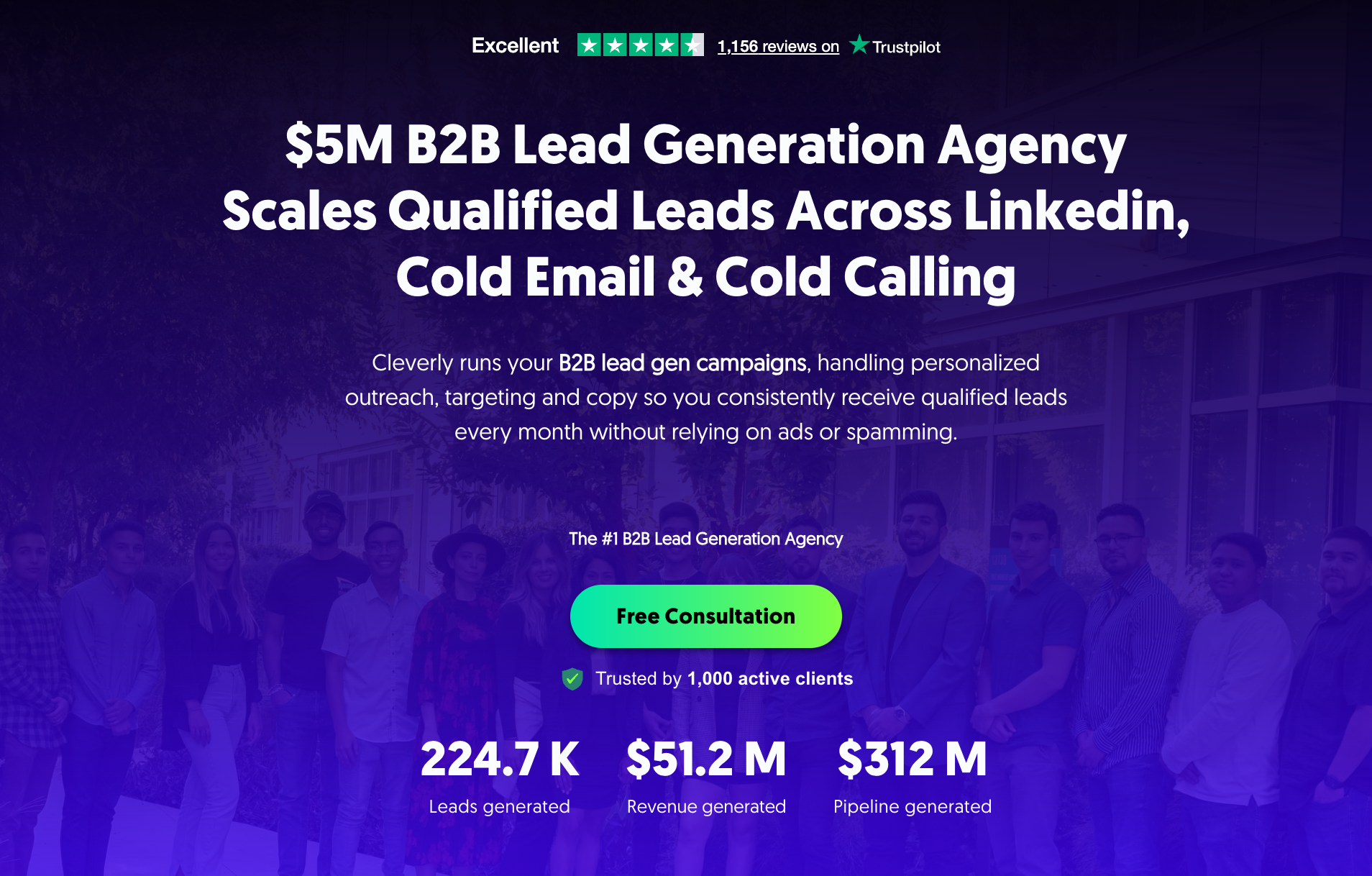
We run outbound end to end for you: ICP definition, verified list building, LinkedIn outreach, cold email, cold calling, and reply handling through to booked meetings. Across our work, we have generated $312M in pipeline for clients.
Meetings are qualified against criteria we agree on up front, so your closing conversations start from a better position.
Asking better questions but running out of deals to ask them in? Cleverly keeps the calendar full. Book a free consultation.
Conclusion
The best sales closing questions find the truth faster instead of extracting agreement. Surface risk early, map the committee, and never end a call without an action, an owner, and a date. Judge progress on what the buyer committed to, not on how the conversation felt.
Here is a practical next step. Pick three questions from this list and use them on your next five calls. Then count how many deals changed the stage, and how many got disqualified. A clear no in week two is worth more than a maybe that runs for six months.
Frequently Asked Questions
Free Resource
How to Scale a Profitable Cold Call System
Get the complete guide — download it instantly now.

Free Ebook
Download the Free Guide
Enter your details to get instant access.
You're all set! 🎉
Your ebook is downloading now.
Click below if the download didn't start automatically.