Table of Contents
Why ROI Matters in LinkedIn Lead Generation
Key Metrics to Track for LinkedIn Lead Gen ROI
How to Calculate LinkedIn ROI Step-by-Step
How to Tie Revenue Back to LinkedIn Leads
What’s a Good ROI from LinkedIn Lead Generation?
Common LinkedIn ROI Mistakes to Avoid
Final Thoughts: Why ROI Should Drive Your LinkedIn Lead Gen Strategy
LinkedIn ROI: Frequently Asked Questions
Modified On :
September 10, 2026
Key Takeaways
- LinkedIn lead generation ROI compares the profit from LinkedIn-sourced deals with the full cost of generating them.
- Include service fees, software, Sales Navigator, internal labor, and sales follow-up time in your total investment.
- Track cost per qualified meeting, cost per opportunity, customer acquisition cost, pipeline, and closed revenue.
- Use consistent CRM source fields to separate LinkedIn-sourced deals from LinkedIn-influenced deals.
- Measure ROI over the full sales cycle because B2B opportunities may close months after the first LinkedIn conversation.
LinkedIn outreach can produce replies and meetings without producing profitable revenue. That is why connection acceptance and response rates are not enough to judge a LinkedIn lead generation service.
LinkedIn lead generation ROI measures the financial return generated by LinkedIn-sourced opportunities after accounting for campaign costs. Those costs should include agency fees, Sales Navigator, software, internal labor, and the sales time required to move meetings through the pipeline.
Cleverly has helped more than 10,000 B2B companies run LinkedIn campaigns that generated $312 million in pipeline and $51.2 million in closed revenue. That experience has shown us that the most useful ROI report connects each LinkedIn conversation to qualified meetings, opportunities, pipeline, and closed deals.
This guide explains the LinkedIn outreach ROI formula, the metrics that reveal campaign quality, and the CRM attribution process needed to connect LinkedIn activity to revenue.
Why ROI Matters in LinkedIn Lead Generation
It’s no secret — LinkedIn has become the go-to platform for B2B outreach. In fact, more than 80% of B2B marketers say LinkedIn is their most effective channel for finding and converting leads.
That means businesses are pouring more budget, time, and effort into it than ever before.
But here’s the thing: more investment doesn’t automatically mean better results. That’s where LinkedIn lead generation ROI comes in.
When you know exactly how much revenue your LinkedIn campaigns generate compared to what you spend, you can:
- Double down on strategies that bring in the highest-quality leads.
- Cut back on tactics that don’t move the needle.
- Confidently justify your spend to your leadership team or clients.
Vanity Metrics vs. Real Performance Indicators
A lot of people get caught up in numbers that look good but don’t actually translate to revenue. For example:
- Vanity metrics: Connection requests sent, profile views, likes, and comments.
- Performance indicators: B2B lead generation ROI, booked calls, qualified leads, deals closed, and revenue generated.
We focus on the numbers that directly tie back to your bottom line. Sure, it’s nice to see a post get 200 likes — but if none of those likes turn into qualified leads or customers, it’s not really helping your business grow.
ROI keeps you grounded in what matters most: are your LinkedIn campaigns actually making you money?
📈 Turn LinkedIn Conversations Into Measurable Pipeline
Cleverly handles targeting, messaging, outreach, and reporting so you can track qualified meetings and revenue, not just connection activity.
Key Metrics to Track for LinkedIn Lead Gen ROI
If you want to measure LinkedIn lead generation ROI accurately, you need to focus on the right LinkedIn lead generation metrics — the ones that tell you how efficiently you’re turning outreach into revenue.
Here are the six key numbers we track for every Cleverly client:
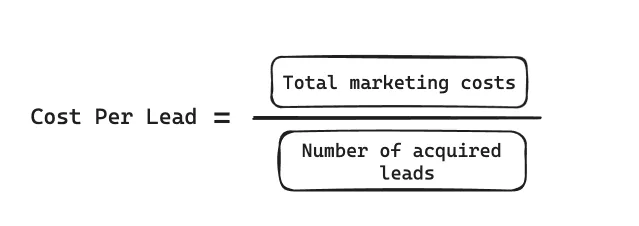
1. Cost per Lead (CPL)
This is how much you’re paying for each qualified lead.
- Formula: Total spend ÷ Number of qualified leads.
- Why it matters: A lower CPL means your outreach is more cost-effective.
- Example: If you spend $1,000 and generate 20 qualified leads, your CPL is $50.
2. LinkedIn Outreach Conversion Rate
This is the percentage of people who take the next step after your initial outreach, whether that’s booking a call, scheduling a demo, or requesting more info.
- Formula: (Number of booked calls or demos ÷ Number of prospects engaged) × 100.
- Why it matters: Even with a high volume of outreach, a low LinkedIn outreach conversion rate signals your messaging or targeting might need work.
If engagement is strong but qualified meetings remain low, review your targeting and LinkedIn outreach strategy before increasing campaign volume.
3. Lead-to-Customer Rate
Not every lead becomes a customer, this metric tells you the percentage that actually close.
- Formula: (Number of closed deals ÷ Number of qualified leads) × 100.
- Why it matters: A strong rate here means your sales team is making the most of the opportunities from LinkedIn.
4. Average Deal Size
How much revenue you typically make from each closed deal.
- Why it matters: If your average deal size is high, even a few conversions can generate a strong ROI.
5. Sales Velocity
The time it takes from first contact on LinkedIn to a closed deal.
- Why it matters: Faster sales cycles mean quicker returns and more capacity for your team to handle new leads.
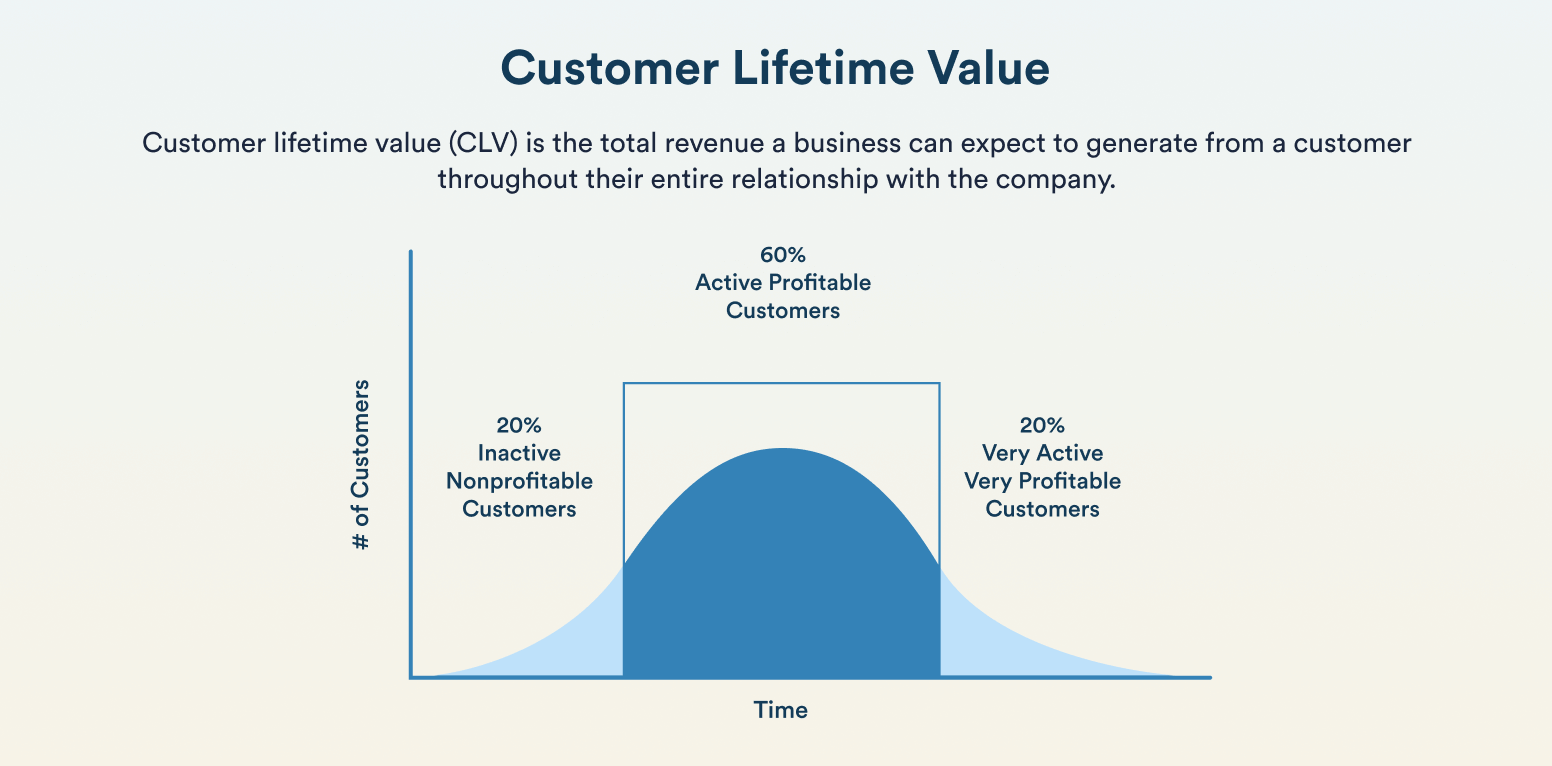
6. Customer Lifetime Value (CLV)
The total revenue you can expect from a customer over the entire relationship.
- Why it matters: If your CLV is high, you can afford a higher CPL and still maintain a healthy ROI.
7. Cost per Meeting, Opportunity, and Customer
Cost per lead can look healthy even when the leads do not turn into viable sales opportunities. Track costs at each stage of the funnel to see where campaign efficiency breaks down.
Cost per qualified meeting = Total campaign cost ÷ qualified meetings held
Count meetings held rather than meetings booked. A campaign with a high no-show rate should not receive credit for meetings that never happened.
Cost per opportunity = Total campaign cost ÷ sales opportunities created
Define an opportunity before the campaign starts. A positive reply or introductory call should not count unless the prospect meets your qualification criteria and enters an active sales process.
Customer acquisition cost = Total sales and marketing cost attributed to LinkedIn ÷ new LinkedIn-sourced customers
Include the cost of running the campaign and the sales resources required to close those accounts. This gives leadership a more honest comparison between LinkedIn outreach, cold email, paid acquisition, partnerships, and inbound channels.
Review these metrics together. If cost per meeting is rising, inspect targeting, messaging, and attendance rates. If meeting costs are stable but cost per opportunity is increasing, the problem is more likely lead quality or qualification.
At Cleverly, we look at these metrics together, not in isolation.
For example, you could have a slightly higher CPL, but if your lead-to-customer rate and average deal size are strong, your ROI will still look great.
How to Calculate LinkedIn ROI Step-by-Step
Tracking metrics is great — but at the end of the day, measuring ROI from lead gen comes down to one thing: knowing exactly how much money you’re making compared to how much you’re spending.
Here’s how we calculate LinkedIn lead generation ROI for our clients at Cleverly.
1. Define Your Total Investment
Start by adding up every cost associated with your LinkedIn campaigns. This usually includes:
- Agency or service provider fees.
- LinkedIn Premium or Sales Navigator subscriptions.
- Any automation or CRM tools you’re using.
- Paid ad spend (if applicable).
This total number is your Total Cost.
Before calculating return, document every expense using this breakdown of LinkedIn lead generation costs, including service fees, software, subscriptions, and internal labor.
2. Add Up the Revenue from LinkedIn Leads
Look at deals that came directly from LinkedIn outreach — from initial connection request to signed contract. Add up the total revenue these closed deals brought in.
3. Apply the ROI Formula
The formula is straightforward:
ROI = (Revenue from Leads – Total Cost) ÷ Total Cost × 100
4. See It in Action: A Mock Campaign Example
Let’s say you run a 3-month LinkedIn lead generation campaign with these numbers:
- Total Cost: $4,000 (Cleverly services + Sales Navigator + tools)
- Revenue from LinkedIn Leads: $18,000
Plug it into the formula:
- ROI = ($18,000 – $4,000) ÷ $4,000 × 100
- ROI = $14,000 ÷ $4,000 × 100 = 350%
The campaign produced a 350% ROI. For every $1 invested, it generated $4.50 in revenue and $3.50 in net return after subtracting campaign costs.
Keep revenue multiple and ROI percentage separate in reports. A 4.5x revenue multiple is equivalent to a 350% ROI when the original investment has been deducted.
🚀 Build a LinkedIn Campaign You Can Measure
Get a managed LinkedIn outreach system tied to qualified meetings, pipeline, and closed revenue.
Attribution: How to Tie Revenue Back to LinkedIn Leads
One of the biggest challenges in LinkedIn lead attribution is proving that a closed deal actually started on LinkedIn.
Without a clear process, you risk underreporting your results or giving credit to the wrong channel.
Here’s how we recommend tracking your B2B lead sources so you can confidently connect revenue back to LinkedIn:
1. Create Consistent CRM Source Fields
Create a controlled CRM source value such as “LinkedIn Organic Outreach” for contacts generated through connection requests, messages, or InMail. Do not let representatives enter different variations such as “LinkedIn,” “LI,” or “social,” because inconsistent labels make reporting unreliable.
Record the campaign name, prospect list, LinkedIn profile URL, first interaction date, meeting source, and account owner. When the contact becomes an opportunity, carry the original LinkedIn source into the opportunity record.
Use UTM parameters when a message contains a website or booking link, but do not depend on UTMs alone. Direct replies and later website visits can lose that tracking data, so CRM source discipline remains essential.

2. Track Meetings Booked via LinkedIn Outreach
- Keep a running list of all meetings, demos, or calls that came directly from LinkedIn conversations.
- Tools like HubSpot, Salesforce, or even a simple spreadsheet can help you log the original touchpoint.
3. Integrate LinkedIn with Your Sales Pipeline
- Your LinkedIn outreach shouldn’t live in isolation. Sync data with your CRM so every deal shows the true lead source.
- This integration makes it easy to pull reports showing exactly how much revenue LinkedIn has generated over time.
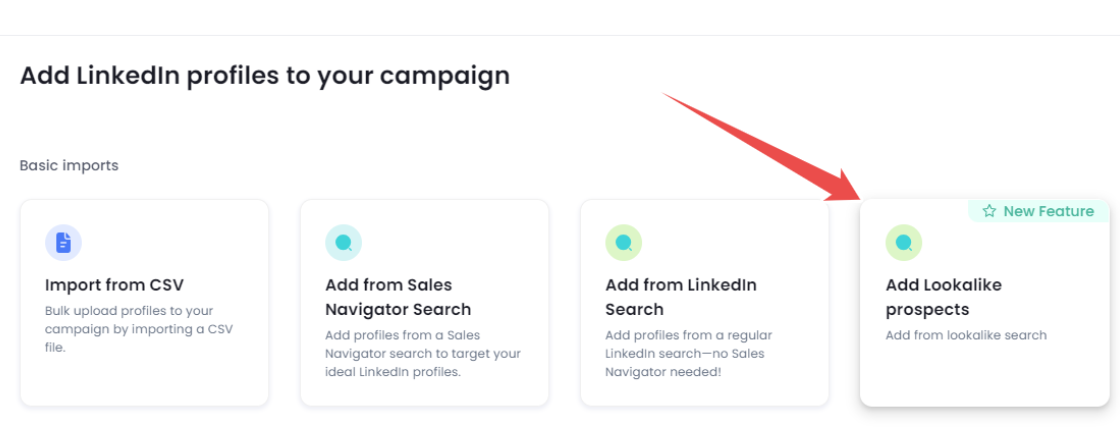
The right sales pipeline management software should preserve the original lead source as contacts move from conversation to opportunity and closed revenue.
Separate LinkedIn-Sourced Revenue From LinkedIn-Influenced Revenue
A LinkedIn-sourced opportunity begins with a LinkedIn connection, message, InMail, or conversation. LinkedIn-influenced revenue comes from an opportunity that began elsewhere but included a meaningful LinkedIn interaction before the deal closed.
Keep these categories separate in your CRM:
- LinkedIn-sourced: LinkedIn created the first identifiable sales conversation.
- LinkedIn-influenced: LinkedIn supported a deal that originated through another channel.
- LinkedIn-assisted: A LinkedIn interaction helped revive or advance an existing opportunity.
Use sourced revenue for the most conservative ROI calculation. Report influenced pipeline separately to show LinkedIn’s broader role without claiming full credit for revenue created by another channel.
For every contact and opportunity, record the original source, latest source, first LinkedIn interaction, campaign name, meeting date, opportunity value, and closed-won revenue. This creates an audit trail from outreach activity to financial outcome.
LinkedIn’s current Revenue Attribution Report also distinguishes influenced leads, opportunities, pipeline, and revenue through connected CRM data.
That report is designed for LinkedIn marketing activity, but the same distinction between sourced and influenced outcomes should be applied to organic outreach reporting.
4. Overcome Attribution Challenges
Common issues include:
- Prospects engaging on LinkedIn but converting later through email or phone.
- Team members forgetting to log the source in the CRM.
- Multiple touchpoints making it unclear which channel gets credit.
How to solve it:
- Train your sales team to ask every lead where they first heard about you.
- Use “first-touch” attribution for high-level ROI reporting and “multi-touch” for a more detailed view.
- Automate tracking wherever possible to remove human error.
When attribution is done right, you don’t just know that LinkedIn works — you know exactly how well it works, and that’s what keeps your ROI reporting airtight.
Benchmarks: What’s a Good ROI from LinkedIn Lead Generation?
If you’re wondering what a “good” LinkedIn ROI looks like, the answer depends on your industry, sales cycle, and deal size.
That said, there are some clear LinkedIn lead generation benchmarks you can use as a guide.
1. Industry Benchmarks
In B2B, a healthy return is typically 3–5x ROI — meaning for every $1 invested, you generate $3–$5 in revenue.
- Strong campaigns with high-value offers can hit 8–10x ROI or more.
- For niche industries with large deal sizes, a single closed deal can cover your entire outreach budget for months.
2. What Agencies Promise vs. What’s Realistic
Some agencies overpromise with claims of “guaranteed 10x ROI in 30 days.” While it’s possible to see quick wins, most high-quality LinkedIn lead generation campaigns build momentum over time.
- Realistic expectation: Steady pipeline growth within 1–3 months.
- Unrealistic expectation: Closing multiple enterprise deals in your first two weeks.
At Cleverly, we’re upfront about this — we’ve helped clients generate $312M in pipeline and $51.2M in closed revenue, but those results came from campaigns that were consistent, data-driven, and refined over time.
3. Why ROI Improves Over Time
Think of LinkedIn as a compounding investment:
- Your network grows, so each post and outreach campaign reaches more qualified prospects.
- Messaging gets sharper as you see what works.
- Warm leads from earlier campaigns often convert months later.
That’s why many of our clients see their best ROI in months 4–6, not month 1. The groundwork you lay early on pays off exponentially as your campaigns mature.
What Counts as a Good LinkedIn Lead Generation ROI?
There is no universal LinkedIn outreach ROI benchmark. A profitable result depends on your average contract value, gross margin, sales cycle, close rate, campaign cost, and customer retention.
A campaign can be commercially successful with a small number of customers when contract values are high. The same result may be unprofitable for a company with low margins or short customer lifetimes.
Set your target using your own unit economics:
- Calculate the maximum customer acquisition cost your margins can support.
- Work backward from your lead-to-customer rate.
- Determine the maximum acceptable cost per opportunity and qualified meeting.
- Compare the actual campaign results with those limits.
A good LinkedIn lead generation ROI is one that produces customers below your allowable acquisition cost while maintaining lead quality and sales capacity.
Common LinkedIn ROI Mistakes to Avoid
Even with the best tracking systems, it’s easy to misread your LinkedIn lead generation ROI if you’re looking at the wrong things.
Here are the pitfalls we see most often, and how to avoid them.
1. Focusing Only on Vanity Metrics
Impressions, clicks, and likes might look nice on a report, but they don’t necessarily mean revenue.
- Always connect these numbers back to booked calls, qualified leads, and closed deals.
- Ask yourself: Did this activity move a prospect closer to becoming a customer?
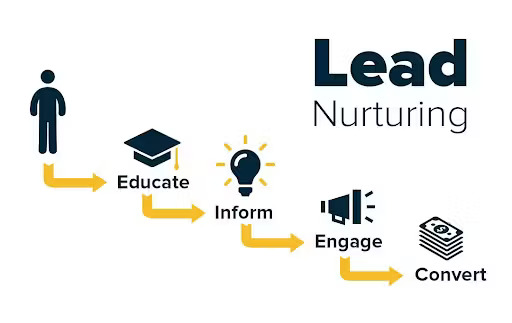
2. Ignoring Long-Term Nurturing Leads
Not every lead will close right away. Some prospects take months to make a decision — especially in B2B.
- Keep track of leads from earlier campaigns and continue to nurture them through content and follow-ups.
- Often, these “slow burn” leads end up generating high-value deals.
3. Not Accounting for Sales Team Performance
You can generate the best leads in the world, but if your sales team isn’t closing effectively, your ROI will suffer.
- Align marketing and sales so both are accountable for results.
- Review call recordings, proposals, and follow-ups to spot areas for improvement.
Clear sales and marketing alignment ensures both teams use the same qualification criteria and attribution rules.
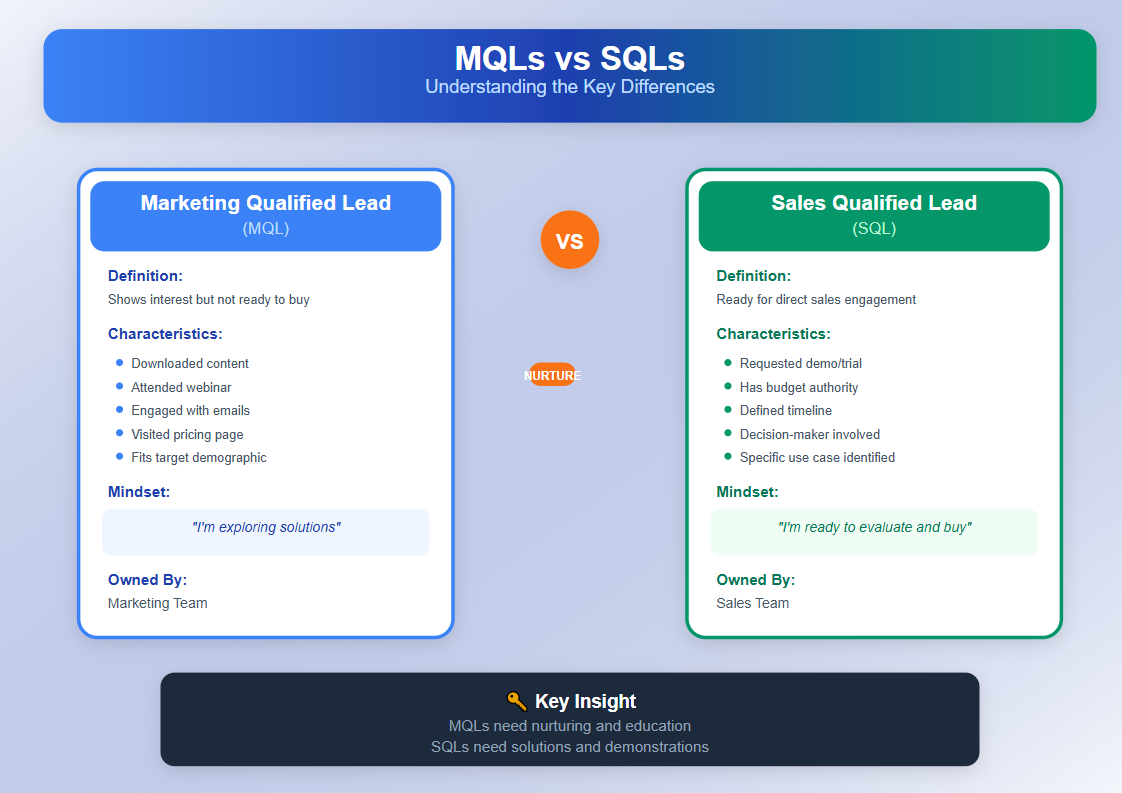
4. Failing to Differentiate Between MQLs and SQLs
Mixing up Marketing Qualified Leads (MQLs) with Sales Qualified Leads (SQLs) can give you an inflated view of performance.
- MQLs: Leads who show interest but aren’t ready to buy.
- SQLs: Leads who are vetted, ready for a sales conversation, and have a higher chance of closing.
- Tracking them separately gives you a clearer picture of the real conversion potential from LinkedIn.
Avoiding these mistakes keeps your ROI reporting honest — and your strategy focused on what actually drives revenue.
Final Thoughts: Why ROI Should Drive Your LinkedIn Lead Gen Strategy
LinkedIn lead generation ROI should show how efficiently outreach turns campaign investment into qualified meetings, pipeline, and closed revenue. Connection requests and replies help diagnose performance, but they do not prove financial return.
Start with complete cost tracking, clear qualification criteria, and consistent CRM source fields. Separate LinkedIn-sourced revenue from influenced revenue so leadership can trust the report.
Cleverly has helped more than 10,000 B2B companies generate $312 million in pipeline and $51.2 million in closed revenue through LinkedIn. If you want targeting, messaging, outreach, and reporting managed as one measurable program, explore Cleverly’s managed LinkedIn lead generation service.
Want to measure your LinkedIn lead gen ROI more effectively? Let’s talk.

Frequently Asked Questions
Free Resource
How to Scale a Profitable Cold Call System
Get the complete guide — download it instantly now.

Free Ebook
Download the Free Guide
Enter your details to get instant access.
You're all set! 🎉
Your ebook is downloading now.
Click below if the download didn't start automatically.